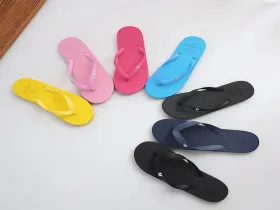
A chain-wide brand colour launch sounds like one artwork change. In practice it changes the order pattern of every consumable in the kit: disposable pedicure slippers, toe separators, and the nail files and polishing blocks that sit in the same tray at the same station. Each item has its own tooling, colour route and print process, so each one carries a different minimum order quantity (MOQ). The right moment to renegotiate is not when you sign the first kit order — it is when your store count, your reorder rhythm and your artwork stability have all moved at once.
Why a Coordinated Kit Has Several MOQs Instead of One
Buyers often assume that ordering slippers, separators and files from one EVA nail products programme means one quantity to negotiate. It does not, because the three items are made differently.
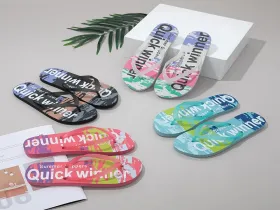
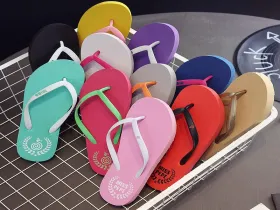
- Slippers are moulded as a one-size flip-flop with a diamond-cut anti-slip sole. The cost driver is the mould and the colour of the foam body, not decoration.
- Toe separators are cut from coloured EVA sheet. They need no new mould for a shape you already make, but they do need the right foam colour and, if branded, a printed surface.
- Nail files and buffers combine foam with abrasive and polishing layers, so their double-sided layout has to be fixed before production starts.
At Fulikai, colours are formed during one-step foaming with colour masterbatch, so a brand colour that lives inside the foam is set at the foaming stage — before any cutting or printing happens. That single fact explains most of the MOQ conversation on a rebrand: matching your Pantone in the foam body commits material earlier and in larger runs than matching it in an ink layer.
The Three Signals That a Renegotiation Is Due
1. Your store count has changed the reorder rhythm
A pilot rollout in a handful of flagship locations and a full chain deployment need different amounts of the same SKU. If your original kit quantity was sized for the pilot, it is now either too small to cover a season or too large to sit in a distribution centre. Bring the current store count and your per-station monthly consumption to the supplier and ask for a revised lot size that matches how often you actually reorder — not how often you ordered during the trial.
2. The brand colour is now frozen
MOQ pressure is highest while the colour is still moving. Every new colour means a new masterbatch match, a new plate for printed parts, and a separate material run. Once your marketing team signs off one permanent brand colour, the same formulation and the same print plate can serve every reorder. That is the strongest point at which to ask for a lower per-order minimum on repeat business, because the supplier's set-up cost has already been paid once.
3. You are ready to commit to a rolling schedule
A single large order and six smaller orders under a signed schedule are not the same request. Fulikai's published cooperation flow runs from needs consultation through proposal, design drafts, mould opening and print moulding, signature confirmation, and a 30 percent deposit on signing the contract. If you can commit to that structure across several releases, negotiate the quantity per release rather than the total — plate-making takes five to seven days and bulk orders can be delivered within fifteen days, so split releases stay feasible inside one season.
What to Change About the Specification Before You Change the Number
Before pushing on quantity, check whether a specification change lowers the true cost driver. Three questions are worth asking any custom EVA foam manufacturing partner:
- Foam colour or print colour? A brand colour printed on the surface uses heat-transfer printing with a white base, which keeps saturation without a dedicated foam batch. A colour inside the foam needs masterbatch at foaming. If your kit can carry the brand colour as print rather than as substrate, you gain flexibility on lot size.
- Can one plate serve the whole kit? Slippers and separators that share logo artwork can share plate-making work even though they are different parts, which removes duplicated set-up charges.
- Do the sizes really need to differ? A one-size-fits-most slipper removes the size curve from inventory entirely. Splitting that SKU into several sizes multiplies your minimums for no benefit in most salon settings.
How Colour Consistency Across the Kit Gets Verified
A coordinated kit fails on the salon floor when the slipper, separator and file tray read as three slightly different versions of one colour. Ask for the check to be written into the order rather than assumed:
- Physical approval before production. Approve a signed sample of every item in the kit together, under the same lighting, not one by one.
- Test coverage during production. Fulikai reports 16 types of tests across production, including colour fastness and tensile strength, plus ink material environmental testing.
- Pre-shipment inspection. Full manual inspection before shipment, with support for third-party inspection and buyer audits.
Certification claims should be confirmed per item, destination market and order rather than carried over from a company page. The Custom Capabilities pages list ISO 9001:2015 alongside CE, EN-71, FDA, FCC, RoHS, SGS and REACH coverage; the applicable certificate or test report for your kit belongs in the purchase order for each SKU.
A Simple Sequence for the Conversation
| Stage | What you bring | What you ask for |
|---|
| Pilot order | Kit concept, target brand colour, store count for the trial | Clear per-item MOQs and a written split of mould, plate and material costs |
| Colour freeze | Signed artwork and approved samples for all kit items | A repeat-order MOQ that assumes set-up is already paid |
| Rolling schedule | Per-station consumption and reorder frequency | Lot size per release, staged delivery, and inspection terms written into the contract |
| Chain rollout | Final store list and seasonal forecast | Price tiers by release volume instead of one large committed order |
The pattern is consistent: quantity asks become easier after the artwork and colour are frozen, because by then the risk being priced has dropped. Asking before the freeze means paying for uncertainty you created.
Getting a Kit Quoted
If your chain is moving to a brand colour this year, send the artwork for all kit items at once and let the factory tell you which parts of the kit are driven by moulds, which by foam colour, and which by print. Fulikai's Shenzhen factory supports custom shapes and colours through stamping and laser cutting based on customer drawings or samples, and reviews submitted designs with improvement suggestions before tooling begins. Reach the team through the message page or call +86 13827489472 to open a kit quotation.