A heated footwear program rarely fails in the retail season because of a heating element. It fails because the wrong sizes arrived, one colorway sold out by week two while another sat in the back room, and the battery packs meant to be inside the box turned up in a separate carton. All three problems start upstream, at the moment packaging is specified. As an EVA foam products manufacturer working with importers on winter programs, we see buyers lock in the size curve and the assortment first, then treat the box as a last-minute detail. This article explains what to check about packaging before you commit, so the size mix and the product selection you ordered are still intact when the containers land.
Why the carton decides what your shelf can actually sell
A seasonal heated footwear program is sold in size runs and colorways, not in loose pairs. Every packaging decision narrows or protects that run:
- Inner pack quantity. Retail receiving usually wants a shelf-ready inner. If the inner holds four pairs but your best sizes sell in singles, staff open cartons at the back door and the size run gets broken before it reaches the sales floor.
- Master carton count. Cartons built around an even pair count push you toward a flat size curve. A curve that leans on intermediate sizes needs cartons packed unevenly, which only works if you say so on the purchase order and not at the packing line.
- Battery placement. Rechargeable styles ship with lithium packs either nested in the shoe box or in a separate service carton. Either choice changes what a customer can open and use on their own, and it changes how spare stock is replenished mid-season.
- Inserts and instructions. Charging steps, heat-level guidance and warranty cards have to sit inside the retail box in the selling language. An insert added at the destination port means every box is opened twice.
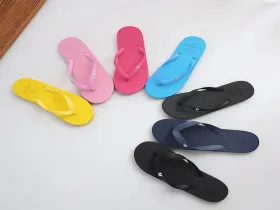
Our own consumable slippers show how flexible this layer can be when it is planned early: our disposable EVA slippers ship one pair per OPP bag or twelve pairs per pack, and customer-specified packaging is available as standard. The same principle applies to a heated style that carries a battery, a charger and an instruction card in the box.
What to confirm about size ranges before artwork is approved
Ask the factory for the available sizes of each style in writing, per colorway. Our heated winter boots are listed with a size range of EU 39–46, while our waterproof heated snow boots with three heat settings are listed as grey in EU 39–45 and wine red in EU 36–41. Two styles inside one program therefore cover different spans, and a single colorway can stop short of the sizes your stores expect.
Our washable rechargeable heated insoles are a useful contrast: they are trimmable to fit EU 34–46, so one stock-keeping unit covers almost the whole adult foot span and no size curve is needed at all. Buy them alongside boots and your packaging plan splits into two logics — sized cartons for footwear, flat-pack counts for insoles.
Size checks to close before production
- Request the available sizes per style and per colorway, not one range quoted for the whole program.
- Ask which sizes the last or the upper rules out, so you do not build a curve around sizes that cannot be made.
- Confirm whether half sizes exist; if they do not, plan a curve that covers the gap in intermediate sizes.
- Check how each size is marked on the box and on the product itself, so pickers match them at receiving.
- Agree whether short-size replacement pairs ship with the same order or in a later shipment, and what that costs.
How packaging shapes your product selection
Product selection on a winter program is usually three or four items: a boot, a slipper, an insole, sometimes a spare battery. Packaging decides whether those items can be merchandised as one offer.
- A boot and an insole sold together need compatible box footprints, or the bundle becomes two shelf positions and two replenishment cycles.
- An indoor heated slipper — our rechargeable heated slippers offer three temperature settings from 45°C to 65°C, full-sole heating, a waterproof build that supports hand and machine washing, and two power options — is a giftable item. Gift packaging means a printed lid, a stable inner tray for the battery, and the size stated on the outside, not a plain brown box.
- Spare batteries and chargers need their own carton marking and their own line on the packing list, otherwise customs paperwork and your receiving count will disagree.
- Returns stock needs a box that survives being opened once. If the retail box is destroyed when the customer opens it, every return becomes an outlet unit.
A ten-point verification list to send your supplier
Send this list with your inquiry and ask for each answer in writing. The items marked critical path cannot be changed after artwork is approved.
- Carton dimensions, pairs per carton and gross weight for every size, so freight cost per pair is calculable.
- Inner pack quantity, and whether the inner can double as a shelf-ready tray.
- Whether cartons are packed by size or mixed, and how mixed cartons are labeled.
- Where the battery sits in the pack, and whether it ships charged or flat for transport.
- insert language and placement, including charging steps and heat-level guidance.
- Barcode position on the retail box and on the carton, one code per size and colorway.
- Whether the retail box can be opened and resealed for returns checks.
- Approval of a fully packed sample carton, not loose product with a photo of an empty box. (critical path)
- A packing list format agreed before the deposit is paid. (critical path)
- The change rule: what it costs to move inner pack quantities after artwork approval.
Work through the list with a packed sample in hand. A carton you can weigh, open and stack tells you within minutes whether the size mix will survive the journey; a specification sheet does not.
Where our process fits into that timeline
Our custom workflow runs from needs consultation and communication through proposal and quotation, design drafts and renderings, mold opening and printing molding, signature confirmation, and a 30% deposit on signing the contract. Packaging belongs to the drafting stage, because box dimensions influence tooling for liners and trays. The full sequence is on our custom EVA product order process page.
On timing, plate-making takes 5–7 days and bulk orders can be delivered within 15 days; our custom EVA foam manufacturing page lists the same service level, with dedicated staff tracking an order end to end. That window is short enough that a late packaging change becomes the most expensive revision in a winter program.
On inspection, we support 100% third-party inspection and run 16 types of tests during production, with full manual inspection before shipment — details are on our factory audits and inspections page. For heated styles, ask your inspector to open one carton per size group and confirm that the marked size matches the pair inside; a mismatch is a receiving problem you discover in peak season, not before.
Packaging mistakes we keep seeing on seasonal programs
- One carton spec for every style. Boots and slippers have different footprints; forcing one carton size wastes cube and crushes box corners.
- Battery in a separate carton with no cross-reference on the labels. Staff cannot pair them at receiving.
- Size marked only on the sole. Pickers cannot see it without opening the box, so intermediate sizes go unsold.
- Instruction insert added at destination. Every box is handled twice and the warranty start date gets fuzzy.
- Colorway spans assumed identical. Confirm per color, as our snow boots show with different EU spans for grey and wine red.
Planning next season while this one is selling
Track three numbers during the first six weeks of a program: sell-through by size, sell-through by colorway, and returns with packaging damage. Those figures tell you which cartons to repack for the following year and which styles need a different inner pack. Bring them to your supplier before tooling starts again; that is when packaging changes are cheap.
If you want a second opinion on a winter assortment, send us your size curve, colorway list and carton target and we will tell you what our packing line can hold. As a Shenzhen EVA foam products manufacturer working with buyers in Japan, South Korea, Europe and the United States, we review packaging alongside the product drawings so the mix you order is the mix you receive.
Talk to our team about your heated footwear program: send an inquiry or call +86 13827489472. Browse heated styles in our non-slip and heated footwear range.