Most sourcing enquiries to a EVA foam products manufacturer start with a sample and a price. The sample looks right, the quotation fits the budget, and the purchase order follows. Two months later the goods are late, the printed logos are off-register, and nobody at the factory can explain why. That failure usually traces back to one unanswered question: does this factory actually own the machines and the people needed to produce my order at my volume?
A demonstration of machine and staffing capacity is not a courtesy tour. It is a verification step, and it matters most in specific situations. This guide sets out when you should ask for it, what to watch while you are there, and how to confirm the answer when you cannot travel to Shenzhen.
Why in-house machinery changes the sourcing decision
EVA foam parts look simple, but the finish depends on a chain of processes: foaming, cutting, stamping, laser processing and printing. A factory that runs these steps in-house controls colour, tolerance and schedule at the same time. A factory that brokers them across subcontractors passes each handover to somebody else's queue, and every handover adds days and quality risk.
The practical difference shows up in three places. Colour consistency comes from one-step foaming with added colour masterbatch, so the shade is set inside the material rather than painted on afterwards; that requires a foaming line you can see running. Print quality comes from heat-transfer printing with multi-pass white-base layers, which needs its own plates and press. Edge definition on die-cut shapes comes from stamping dies and laser cutting held by the supplier. If any one of those sits outside the factory gate, your claim about the finished product is only as good as the middleman's promise.
Staffing works the same way. Printing stations, inspection tables and packaging lines each need trained operators every day of your production window. Where machinery and headcount are both owned by one factory, a schedule slip can be fixed by moving people between steps. Where they are not, the fix depends on a supplier who has no obligation to prioritise you.
Four situations where you should ask for a demonstration
1. Your order repeats across seasons or promotions
A one-off promotional run of custom foam cheering hands can be rescued by overtime. A programme that restocks every quarter cannot. Before you commit to repeat business, ask to see how many presses, cutting stations and printing lines are dedicated to your product family, and whether the shift pattern behind them is permanent or hired for the season.
At Fulikai's Shenzhen site, production lines for foaming, cutting, stamping and laser processing run inside one factory of more than 3,000 square metres. That single-site layout is what supports plate-making in 5–7 days and bulk delivery within 15 days, with the option to reallocate resources when an order turns urgent. Ask any supplier for numbers on this scale and ask which machines produce them.
2. Your product carries a printed logo or licensed artwork
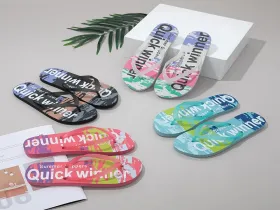
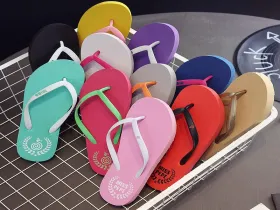
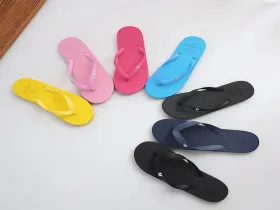
Printed work is where capacity claims break first. A hollow-out or full-colour logo on flip-flops, a heat-transfer panel on a bath puzzle, screen printing on one face and transfer printing on the other: each of these needs plate-making, registration control and colour management before a single saleable unit exists. Request to watch a live print run of something close to your artwork and inspect the result for base colour showing through, edge bleed and colour saturation.
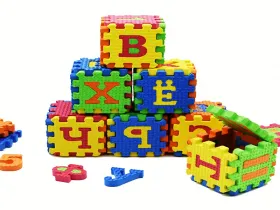
Fulikai's own cases show what to look for. The foldable bath puzzle made for the US brand Skip Hop combined screen printing on one side with heat-transfer printing on the other, plus double-sided lamination and foldable packaging — a build that only works when printing and lamination sit under the same roof. The Monster Jam cheering-hands programme is the reverse example: high-volume event merchandise where consistent print across thousands of pieces decided whether the campaign looked professional.
3. Your product goes into a child's hands or onto skin
Bath toys, alphabet mats, nail files and pedicure slippers sit in regulated categories. Testing is not a document you accept from a PDF; it is a routine performed by people using instruments you can watch. Ask what tests run during production and how often.
Fulikai reports 16 types of tests across production, covering colour fastness, tensile strength, ink material environmental-protection testing and children-product safety testing, with the factory certified to ISO 9001:2015 and holding CE, EN-71, FDA, FCC, RoHS, SGS and REACH certificates. Treat any certification list as a starting point rather than proof: ask for the specific test report that matches your product, your destination market and your order date, since certificate scope varies by item and country.
4. You are the one who has to answer for the goods
Retail buyers, cross-border sellers and agencies that resell to their own clients carry the downstream risk. For them a demonstration is not optional — it is how they justify the supplier to their compliance team. Fulikai supports 100% third-party inspection, carries out full manual inspection before shipment and holds factory audit reports from Coca-Cola, Walmart and Sedex. Buyers are welcome to conduct their own audits.
One detail is worth explaining before you visit rather than after: Fulikai states that its average defective rejection rate exceeds 10%. Read as a quality problem, that sounds alarming. Read as an inspection result, it means the pre-shipment screen is strict enough to pull out more than one in ten suspect pieces before they reach your container. Ask any factory what their own inspectors reject and why — a supplier with nothing to report is usually a supplier who is not looking.
What to watch during the visit
- Machine condition, not machine count. A long row of presses means little if half are idle. Look for tooling that matches your product type and material stock at the machines.
- Staffing depth at the bottleneck. Count operators at printing and inspection stations, since those steps absorb delays first. Ask whether the same team runs your order in peak month.
- In-process records. Test sheets, colour approvals and inspection notes should exist on the floor, not only in a sales office folder.
- A live sample of your own specification. Ask for it before you sign. Plate-making takes days, not weeks, so a supplier who cannot produce a printed sample quickly has a capacity answer you should hear early.
If you cannot travel: verify capacity remotely
Video-walk the production floor with a named contact, request dated photographs of your product running on the line, and confirm who tracks your order end to end. Fulikai assigns dedicated staff for full-process order tracking and keeps its team available around the clock, which is what makes remote supervision workable from another continent.
Then follow the published custom order sequence rather than skipping ahead: needs consultation and communication, proposal and quotation, design drafts and renderings, mold opening and printing molding, confirmation of signature, and a 30% deposit on signing the contract. Each stage is a checkpoint where capacity either shows up or does not.
A short qualification checklist
- Which processes are in-house, and which are subcontracted?
- What is the plate-making lead time for my artwork, and what does a sample plate cost?
- What is the bulk production window once the deposit clears?
- Which tests run during production, and can I see the records?
- Do you support third-party inspection and buyer audits, and which audit reports do you already hold?
Ask those five questions of three suppliers and compare answers, not brochures. An OEM and ODM EVA foam manufacturer with foaming, cutting, stamping, laser processing and printing under one roof will answer them without hesitation — and will happily show you the floor while you are in Shenzhen.
Bring us your drawing or sample and our team will review it with you: send your enquiry or call +86 13827489472.