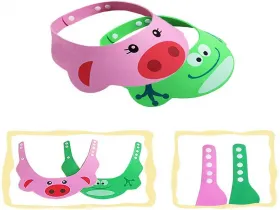
A complaint about a floating sea animal bath toy usually arrives as one short sentence: "it doesn't float right." A photo of the toy on the bathroom shelf is not enough for a factory to work from. Floating bath toys fail in two different ways, and the photographs you send decide which one we look at first — whether the piece loses buoyancy and sinks, or keeps its lift but settles sideways, nose-down, or tilted at an angle in the tub.
Why a supplier needs photographs at all
A floating sea animal toy is a thin die-cut shape whose behaviour in water depends on details that never appear on a purchase order: the foam grade it was cut from, how thick the sheet actually was on that run, whether one face carries a solid printed panel and the other does not, and whether two layers were bonded together. None of those are visible in a product listing photo, and all of them change how the piece sits in the tub.
That is why "some pieces float badly" cannot be fixed with words alone. The photographs below let us separate a material problem from a design problem before we quote you anything, which saves both sides a wasted sample round.
Sinking and tilting are two different faults
Losing buoyancy is simple: the part no longer displaces enough water for its own weight. Holding a position is geometry. A die-cut sea creature can leave our line floating level and still reach a retailer's complaint list because a printed film over one face added mass on that side, or because a laminated panel doubled the thickness along the belly while the back stayed thin. Once the centre of buoyancy and the centre of gravity move apart, the piece rotates until it finds a position where it is stable — and that position is rarely the one your artwork was drawn for.
The distinction matters commercially. A buyer reporting "the crab floats upside down" is describing a balance problem that tooling and material choice can correct. A buyer reporting "the crab sank after two baths" is describing water uptake, which points at the foam itself. Send both complaints in one sentence and we will quote you the wrong remedy.
The six photos we need for a floating position complaint
Send these against a plain background, in daylight or white light, with something measurable in the frame. All six in one email let our engineering team form a hypothesis before we come back to you for anything else.
- Side profile at rest, camera level with the waterline. Shoot from the side, not from above. This is the photo that shows whether the piece rides high at one end and low at the other, or sits flat but on its back.
- Front or top view of the same resting position. Paired with the side profile, it tells us whether the tilt runs along the length of the body or across it — a different cause in each case.
- A straight edge or ruler laid on the tub beside the piece. Any ruler, coin, or credit card is enough. Without something measurable in frame we are judging thickness from perspective alone.
- The printed face close up, dry, under even light. We read the print layer as weight. A solid heat-transfer panel covering one side of a thin piece is a real contributor to a tilt, and it disappears in a wide shot.
- Both faces of the same single piece, laid flat. Lay the toy on the table and photograph the front, then the back. We are looking for lamination over one face only, uneven edges, glue lines, or a seam where two sheets were joined.
- One short video of the piece released from upright in clean water. Push it under or stand it on end, let go, and film what happens as it settles. A piece that rights itself is behaving normally; a piece that rotates to a fixed tilted position has a genuine balance fault we can correct on the next run.
Two details buyers forget to photograph
Photograph the same toy in both clean water and soapy bath water, and tell us which one it behaves badly in. Soap changes how water wets a foam surface, so a piece that only misbehaves in bubbly water is pointing at something different from a piece that tilts in a clear bucket.
Also photograph the packaging as it arrived, including any crushed or compressed state. A thin floating piece stored under load in a carton for weeks can reach the end user with a bend set into it, and what the customer reports as a production defect is really a transit problem.
What we do with those photos
With a level side profile plus something measurable in the frame, our team can judge whether the fault sits in material density, in cut thickness, or in the weight of the print layer. Our Shenzhen factory runs its own foaming, cutting, stamping and laser lines, so a correction is not handed to an outside vendor — it comes back to the same line that made the batch. Colour is formed during one-step foaming with added colour masterbatch, so material and colour are set together at the source rather than corrected afterwards.
If the photos point at the print layer, we look at our heat-transfer setup. We use multi-pass white-base printing for colour saturation, and on a thin floating part that added layer has to be weighed against buoyancy, so we review whether the solid printed area can be reduced or broken up without losing the design.
If the photos point at the foam itself, the conversation moves upstream. We work with long-term upstream material suppliers and can recommend a foam grade matched to your destination country's standards, rather than shipping you the same sheet that failed and hoping a different cut fixes it.
Our production process includes sixteen types of tests, covering colour fastness, tensile strength, ink environmental testing and children's product safety. Every order also gets a full manual inspection before shipment. If you want buoyancy and floating position verified on an EVA bath toy order, tell us at sample stage and we will include that check in the pre-shipment inspection instead of leaving it to chance.
What to include in the message alongside the photos
- Your purchase order or product reference, and the batch if you have it.
- How many pieces out of how many show the fault — a ratio, not a guess.
- Whether the fault appeared on arrival or after a number of baths at home.
- The water it fails in: clean bucket, bathtub with soap, pool, or all three.
- One photo of the artwork file you approved, so we compare against the signed-off version.
How to describe the fault in one line, before the photos
Write the symptom as a position, not an opinion. "The dolphin rests on its back with the belly up" tells us more than "the dolphin floats wrong," and it takes the same effort to type. Note which way the face points when the piece settles, whether that position is the same every time you try it, and whether other shapes in the same set do the same thing or only this one.
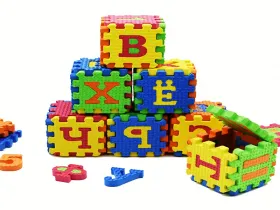
If your line includes letter and number sets alongside character pieces, send the failing piece together with one plain letter from the same order. A simple die-cut letter sits level by nature, so it works as a control sample and shows whether the problem belongs to that character's shape or to the batch as a whole.
A worked example: the seahorse that floats nose-down
Consider a tall, narrow piece — a seahorse in a floating bath toy set — where the reported fault is "it stands up in the water instead of lying flat." That one sentence can describe two opposite causes. If the head dips and the tail stays up, extra mass has gathered at the top of the piece. If the whole body turns vertical and stays there, the shape is simply too narrow along its length to be stable while horizontal — a decision made in the artwork, before any tool was cut.
The side-profile video separates the two in seconds. In the first case we look at print coverage and thickness around the head. In the second, the fix belongs to the die: widening the body or thickening the lower section changes which position the piece settles into. Neither fix can be chosen from a photo taken straight down on the tub.
Other floating products covered by the same photo list
Position faults are not limited to character toys. They appear on any EVA part expected to hold a set position in water: EVA swimming kickboards that twist under a swimmer's hands, floating game trays that lean to one side once a cup is placed in the holder, and bath puzzle pieces meant to cling to a wet tile rather than drift down the wall. For all of them the request is the same — level side view, something measurable in frame, both faces photographed flat, and a short clip of the item released from an unnatural position.
Turning the diagnosis into your next order
Once we agree on the cause, plate-making takes 5 to 7 working days. Production time after sample confirmation runs 25 to 30 working days for most custom orders, depending on quantity and finishing, and bulk orders can be delivered within 15 days when the schedule allows. Send the six photos with your order reference and we come back with the likely cause, the change we propose, and a fresh sample before you commit another run.
If a supplier asks for more than this list to look at a floating position complaint, ask them what exactly is still missing. If they ask for nothing at all and only offer a credit against the next invoice, the following batch will behave just like this one.