A pilot order is where a 3D slot-together bath puzzle either earns its place in a catalogue or quietly disappears from it. On the showroom table every piece looks fine. The real test starts once the set has spent time in a bathtub, then in a preschool sensory bin, then on a shelf for a week. If the standing dinosaur still holds itself upright and the island base is still flat, the SKU survives the review meeting. If it leans, softens or no longer sits true, buyers cut it.
Soaking is not a quality footnote for this product family; it is the acceptance criterion. The checklist below is how we suggest you write that criterion into your own pilot order paperwork before you place the order.
What changes after water exposure, and what should not
Two things can go wrong once foam pieces spend time underwater. The material itself can take up water and turn heavy and soft. Or the geometry that makes the toy stand up — slots, tabs and base footprint — can loosen, so a piece that looks dry still fits badly.
On our dinosaur EVA bath puzzle playset, the pieces are cut from buoyant EVA foam and the design intent is a slot-together build: dinosaurs, volcano, palm trees and ocean elements that lock onto an island base. Buoyancy, fast drying and clean slot fit are the three properties we ask our own quality team to verify, because those are exactly what a parent or a teacher judges after ten baths.
If a supplier offers closed-cell foam for a water toy, take them at their word and then test it. Our marine products use closed-cell EVA precisely because it does not soak up water, and the same logic applies to a bath puzzle that has to survive daily immersion. Ask for the material description in writing on the sample sheet, then confirm it with your own soak test.
A five-point assembly check you can run during the pilot
Run this on three random units from the pallet, not on the pre-production sample you approved. The gap between approved sample and production lot is where most complaints live.
- Dry fit first. Assemble the scene before any water touches it. Note how much force a child needs to seat a tab, and whether the finished figure stands on its own.
- Soak, then re-fit. Leave the set submerged for a realistic session length, drain it, and assemble again while still wet. A slot that has swollen slightly will feel tight; one that has opened up will wobble. Either result is a reason to adjust the cutting tooling now, not after thousands of units have shipped.
- Dry and check again. Air dry the pieces and rebuild the scene. This is the step most buyers skip, and it is the one that catches permanent deformation: a base that cupped, or a tab that took a set.
- Check the print. Full-colour dinosaur artwork is what sells the set on shelf. Rub a wet finger over the printed face and look for lifting edges or colour transfer. Heat-transfer printing with a white base holds saturation through repeated wetting, which is why we use it on printed bath lines.
- Inspect the edges. Preschool buyers reject burrs and sharp corners immediately. Rounded, smooth edges should still be smooth after soaking, not peeling or fraying.
Write the acceptance terms into the pilot order before you place it
Pilot orders go wrong when buyer and factory each carry a different definition of "passed". Three clauses save that conversation later.
- A named test, not a feeling. Put the soak duration, the re-fit criteria and the drying period in the purchase order. "As approved sample" is not a specification.
- Inspection rights. We support third-party inspection on the full order, and production runs pass through 16 types of tests covering colour fastness, tensile strength, ink environmental testing and children's product safety. Our Shenzhen factory works to ISO 9001:2015 and holds CE, EN-71, FDA, FCC, RoHS, SGS and REACH certificates. The certificate that matters for a preschool SKU is the one matching your destination market, so tell us the country and we will confirm the applicable report before production starts.
- Realistic timing. Custom samples take 5–7 working days, and production runs 25–30 days after sample confirmation. Build that into your catalogue launch date instead of pushing for a miracle in week four.
Building the rest of the STEM line around one hero SKU
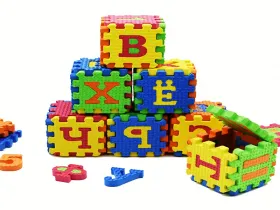
A preschool catalogue rarely sells one toy; it sells a themed shelf. If the dinosaur set works, extend it with pieces that share the same material logic and the same behaviour in water. Foam number puzzles for toddlers bring counting into the same bath routine, while 36-piece foam bath letters and numbers give you the entry-level price point that pulls first-time buyers in. Teachers and daycare purchasers usually stock alphabet sets in volume and then add the 3D scene sets as premium items.
Because shapes are produced by stamping and laser cutting from your drawings, a themed family of SKUs can share colours and tooling decisions instead of starting from zero each time. That is also where a supplier's design input earns its keep: our team reviews submitted artwork and flags linework that will not cut or print cleanly before the mold is opened.
A cautionary note on bonded parts
If your design uses laminated layers instead of a single cut piece, add delamination to the soak test. Double-sided lamination is very doable — we produced a foldable bath puzzle for the US brand Skip Hop that combined screen printing on one face, heat-transfer printing on the other, double-sided lamination and foldable packaging — but every glue line is another line to verify underwater. Where a design can be cut from one piece instead of glued, say so on your drawing.
Before you send the enquiry
Send us the scene sketch, the target piece count, the age grade for the catalogue and the destination market. We will come back with a proposal, renderings and a sample plan, and we will tell you plainly if a slot detail needs changing before it turns into an after-soaking failure on your shelf.
Talk to our team about your pilot order through the message form, or review what we can customize on the custom capabilities page.