A first container of disposable EVA spa flip-flops usually passes inspection. The complaint arrives on the second order: straps tear at the toe post, one size turns out to run small for your market, and the soles feel slicker than the sample promised. Because these slippers are a low-cost consumable, buyers rarely test them the way they test hard goods — yet a batch that fails in salon or hotel use becomes waste in every location that receives it. Below is the pre-production checklist we recommend before you release another purchase order, written from the perspective of a Shenzhen EVA foam products manufacturer that supplies these slippers to spa, hotel and nail-salon programs.
Why strap failure shows up only after the first order
Disposable flip-flops are usually one-piece die-cut or stamped EVA with a moulded thong strap. On a dry floor in your office, any sample feels adequate. Failure appears under real conditions: wet tile around a foot bath, repeated flexing as a client walks from the pedicure chair to the reception desk, and packaging compression during ocean freight. Two variables drive most of the difference between two production lots of the same model — foam density and strap anchoring. Neither is visible on a datasheet unless you ask for it in writing, and neither is fixed by reordering the same item number.
Check 1: strap pull-out at the toe post
Ask the supplier to state how the thong is secured. A strap formed with the sole during foaming behaves differently from a strap inserted after cutting, and only the first holds up under a steady pull test. Before repeating an order, request two things: the tensile strength result recorded for your previously accepted lot, and the same figure for the new one. Suppliers that run in-process testing can produce it — Fulikai, for example, includes tensile strength among the production tests on its EVA foam quality control line, together with colour fastness and ink environmental checks. Ask for that record instead of accepting a general assurance.
A practical acceptance step: take pairs from the pre-production sample and from a mid-production carton, hang a weighted bag from the strap for a set time, and compare deformation. Record it with photos. If the second lot deforms more than the first, stop the shipment before it is loaded.
Check 2: sole size against your customers' feet, not the sample pair
"One size fits most" hides a real risk. The published specification for our EVA disposable slippers is a one-size-fits-all sole of 310 × 110 × 3 mm, suited to a foot length of about 270 mm; the disposable EVA foam flip flops we make for salon use are listed at 26 × 11 cm. A spa chain in North America and a hotel group in Japan read those figures very differently, and the two listings do not describe one shared standard. Before reordering, confirm three numbers in your purchase specification: sole length, sole width and sole thickness. If your market needs a longer footbed, say so — tooling changes on a die-cut slipper cost far less than writing off a container.
Check 3: sole texture and the wet-floor disclaimer
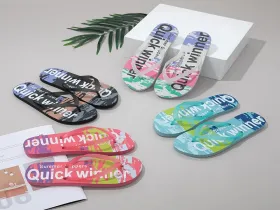
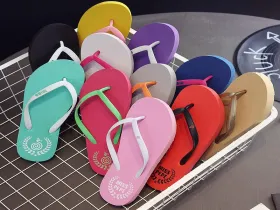
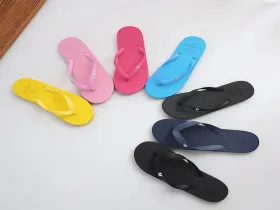
Texture is a specification item, not a cosmetic one. The same EVA sheet can be supplied smooth, embossed or diamond-patterned, and our disposable spa flip flops use a diamond-cut sole texture intended for wet surfaces. Match the texture to where the slipper is actually worn: poolside and foot-bath areas need the cut pattern; a guest room or travel kit does not.
Also review what your own instructions say. Even an anti-slip foam sole is not a claim of safe walking on wet, smooth tile — that wording belongs in the packaging insert and in staff training, not only in the product listing. Repeating an order without re-checking the texture and the warning text is how a batch that technically meets spec still creates liability.
Check 4: print durability where you add a logo
Branded slippers fail at the print before they fail at the strap. Screen printing and heat-transfer printing both work on EVA, but heat transfer with a white base layer holds saturation better on coloured foam, which is why we use multi-pass white-base printing for logo work. For a repeat order, ask for the same plate you approved last time — not a redrawn file — and confirm the print method has not been changed to cut cost. A print that cracks at the flex point of the sole will peel within one wear.
Check 5: packaging count and how cartons travel
Standard packing for these slippers is one pair per OPP bag, with cartons around 200 pairs, and multi-pair packs on request. Verify the inner pack quantity matches what each receiving location actually distributes; a salon that restocks weekly needs different carton sizing than a hotel group shipping to housekeeping stores. Also confirm that bags are sealed in a way that keeps straps from being compressed for weeks in transit, since a deformed strap will not recover once it is on a client's foot.
Check 6: inspection terms written into the repeat order
Do not let a reorder become "the same as last time" by default. Put the acceptance criteria in the order itself: strap pull result, sole dimensions, texture type, print method and packing count. We carry out full manual inspection before shipment and support 100% third-party inspection if you arrange it; buyers who specify their own defect criteria in advance get a much cleaner pre-shipment conversation than those who rely on a general "as approved" clause.
A short sequence to run before the next purchase order
- Pull two pairs from stock you are still selling and photograph every failure point: strap base, sole edge, print surface.
- Write down the four numbers that matter — sole length, width, thickness and carton quantity.
- Ask the supplier for tensile and colour-fastness records covering both the previous lot and the new one.
- Confirm texture choice against the real use area: wet treatment rooms or dry guest areas.
- Approve a pre-production sample packed the same way as bulk, then release the order in writing with those criteria attached.
None of these steps is complicated. What matters is that they happen before the order rather than after the complaints. If you are evaluating suppliers for salon and hospitality consumables, our Spa Slippers range covers pedicure flip-flops, one-size anti-slip pairs and disposable slippers for hotel guest rooms, and our custom EVA foam manufacturing team can quote a revised sole size or print method on request.
Shenzhen Fulikai Packaging Products Co., Ltd. — +86 13827489472 — Contact Us