A retail box and its instruction sheet usually carry months of approvals: colour proofs, dieline versions, battery warnings, size charts, translated text. When that pack moves to a new buyer of private label heated footwear — a new distributor, a second brand inside the same group, or your own re-brand for a new market — the risk is not the foam or the heating element. It is the paperwork. One stale warning line on the insert, one barcode that no longer matches the carton label, and a whole container sits in customs or comes back as non-conforming.
Below is the handover method we use at Fulikai when approved artwork changes hands, written for brand owners, importers and procurement teams who are re-issuing an existing pack design to a new buyer.
Start with what "approved" actually means
Before anything is transferred, write down which artefact was signed off and by whom. In heated footwear programmes the approval trail normally runs through five separate items, and they are rarely approved on the same date:
- The retail box dieline — structural file with panel sizes, window cut-outs and material specification.
- The printed artwork — colour proofs or a physical signed sample of the box face and back panel.
- The instruction sheet or user guide — charging steps, heat settings, wash guidance, age and usage warnings.
- The product label and carton marking — model name, size range, barcode, country of origin, batch code position.
- The artwork-to-product link — which SKU, colour and size run each artwork version belongs to.
A transfer that only passes on the last PDF of the box loses the reasoning behind earlier decisions. The new buyer sees a finished file but not the constraint that produced it, and then asks for exactly the change that was already rejected once.
Build one artwork control sheet per SKU
The single most useful document in a handover is a one-page control sheet. It costs an hour to write and prevents almost every re-print argument later. For each SKU, record:
| Field | What to capture |
|---|
| Artwork version and date | The exact file name of the approved box and insert, plus the date the buyer signed it. |
| Approver and channel | Who approved it, and whether approval came by email, a signed proof or a physical sample with a signature. |
| Applicable SKU and sizes | Model, colourway and size range the artwork was approved for — heated slippers, winter boots and insoles each carry different warning text. |
| Market and language | Destination country and the languages on the insert. Our team recommends raw materials that meet the corresponding national standards once you tell us the destination country. |
| Print method used | How the box and any printed product surface were produced, since a print method approved on EVA foam does not always transfer to a different substrate or finish. |
| Rejected options | Variants already tried and turned down, with the reason. This is the part buyers most often fail to pass on. |
| Open items | Anything still pending — a translation not yet reviewed, a warning block waiting on legal sign-off. |
Watch the naming. On live product pages the displayed title and the specification block do not always use the same product name. Take the model name for labels and inserts from one agreed source — usually the signed label proof — and repeat it identically everywhere, or the new buyer will print two names on the same pack.
Transfer the technical constraints that sit behind the artwork
Artwork for heated footwear is constrained by the product underneath it. A new buyer who inherits only the graphics will break those constraints without knowing it.
Print and plate-making
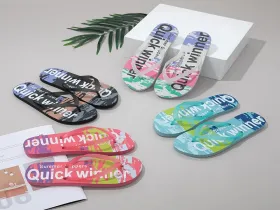
Where the pack includes printed EVA components or a printed insert, note the print process that was approved. Our self-developed heat-transfer printing gives over 95% colour fidelity with no underlying base colour showing through, and multi-pass white-base printing lifts saturation further. An artwork file that looks correct on screen can still fail if the new buyer sends it to a printer without the white base layer. Plate-making takes 5–7 days, so an artwork change discovered after handover costs time as well as money.
Battery, charging and safety text
Inserts for rechargeable styles carry wording that must match the actual configuration shipped. The heated slippers list three temperature settings and two heating options — a hidden battery or direct power supply — while the heated insoles list four levels with a 10000mAh rechargeable battery, and the winter boots describe their own heat zones and sole features. If the new buyer switches to a different configuration, the insert has to be re-written to match it, not copied across. Copying an insert from one style to another is the most common handover error in this category.
Size charts
Size ranges differ by style — EU 39–46 on some boots, EU 34–46 for trimmable insoles, colour-dependent ranges such as grey EU 39–45 and wine red EU 36–41 on another. The size chart printed on the box must be re-checked against the range actually ordered, not inherited from the previous buyer's order.
Run the new buyer through a short re-approval, not a blind handover
Treat the transfer as a compressed repeat of the standard cooperation process rather than a file drop. The steps stay the same — consultation, proposal and quotation, design drafts and renderings, mould opening and print moulding, signature confirmation, then the deposit on signing — but everything already approved moves through quickly.
- Send the control sheet and the approved files together. The new buyer sees what exists and why it was chosen.
- Ask for their market and retailer requirements up front. Barcode standard, warning wording, retailer-specific pack rules and language list all change the box.
- Re-proof anything that touches a claim or a safety statement. Heat settings, battery capacity, washability and age grading are claims; wording changes need a fresh signature.
- Get one signed confirmation of the final pack set — box, insert, label and carton marking as a bundle, not file by file.
A single bundled sign-off is what stops the box from being updated while the insert stays on the old version.
Protect the handover with inspection records
The new buyer inherits your quality expectations as well as your artwork. Every production run passes 16 types of tests covering colour fastness, tensile strength, ink material environmental testing and children's-product safety testing, followed by full manual inspection before shipment; we support 100% third-party inspection and welcome buyer audits, and hold audit reports from Coca-Cola, Walmart and Sedex. Ask the incoming buyer to state in the purchase order which of those checks they want repeated on their run, so the inspection scope is agreed before the first carton is printed rather than argued about afterwards.
A quick handover checklist
- Signed proofs for box, insert, label and carton marking, with version numbers and dates.
- Control sheet per SKU, including rejected options and the reasons.
- Confirmed destination country and language list for the new market.
- Size range and colourway of the incoming order, checked against the printed size chart.
- insert text matched to the exact battery, heat-setting and wash configuration being shipped.
- New buyer's retailer and barcode requirements in writing.
- Agreed inspection scope for the new run, including third-party inspection if required.
- One signature covering the complete pack set before plate-making starts.
Handled this way, the artwork transfer takes a few working days and the risk of a re-print drops to near zero. Handled as a folder of PDFs in an email, it costs a container.
Transferring an approved pack design, or starting a new private label programme? Fulikai is a Shenzhen EVA foam products manufacturer with a 3,000-square-metre factory and 19 years of custom tooling behind our custom EVA foam manufacturing service. Send us your current box and insert files and we will review them against the incoming order before anything goes to plate.
Call or message +86 13827489472, email sales@fulikaisz.com.cn, or use the enquiry form.