A nail training school does not buy nail files and polishing blocks the way a salon does. The tools have to survive hundreds of first attempts at filing, buffing and polishing, they have to be cheap enough to replace every term, and they still have to teach correct technique. That mix of heavy wear and tight budget is exactly why the stock-versus-OEM question matters before you place the order.
Here is how we usually advise training schools, teaching-kit resellers and consumable buyers at Fulikai, a Shenzhen EVA foam products factory making custom and standard EVA articles since 2008.
What a practice set actually asks of a polishing block
In a classroom the same three steps repeat on every exercise, and the block is replaced far more often than in a salon. Our EVA nail file line follows that sequence: shape the free edge with the file side, buff the nail surface with the sponge side, then bring up shine with the polishing side. The pieces are double-sided, so one item covers two steps of the drill.
- Dual-sided shaping file — dual-grit surfaces for filing edges and removing polish between exercises.
- Dual-sided sponge buffer — flexible, washable sponge for smoothing the surface and lifting surface oils before gel practice.
- Dual-sided polishing buffer — fine abrasive on one face and soft sponge on the other, for finishing practice manicures to a visible shine.
The practical consequence: a training school needs predictable, repeatable pieces in quantity, not one perfect prototype. That is where the two purchasing routes divide.
Stock designs are usually the right call when…
- The syllabus decides the tool. If your curriculum teaches filing, buffing and polishing as separate steps, an existing double-sided shape already matches it. Nothing about a school's technique lesson changes because the block carries a logo.
- You are replenishing mid-term. Consumables run out at unpredictable times. Standard pieces move on our regular production rhythm — bulk orders can be delivered within 15 days, and plate-making is not in the critical path at all.
- The budget is per student, per term. When the purchasing officer calculates cost per learner, plain packaging and an existing tool shape keep the number low.
- You are testing a new course line. Order the standard block first, watch how fast students wear through it, then decide whether a custom version is worth the tooling conversation.
OEM becomes worth it when…
Custom work pays off once the set has to do something beyond cutting and buffing — that is, once the block also carries information.
- Your school brand or accreditation mark must appear on the tool. We print by heat transfer and silk screen. Our heat-transfer process prints without an underlying base colour showing through and reaches over 95% colour fidelity, with multi-pass white-base printing for stronger saturation — enough for a clean logo on a small block.
- You want the set colour-coded by module. Colour is formed in one-step foaming with added masterbatch, so beginner buffers can be one colour and advanced polishing blocks another. Students sort their kits by eye instead of reading labels.
- The block shape itself is part of the lesson. We produce shapes from customer drawings or samples using stamping and laser cutting, and our team reviews submitted artwork and suggests adjustments such as linework changes before production.
- You are selling kits to other schools. A reseller's own set needs its own face on it. OEM is the only route that gives you a product you can list under your name.
Rule of thumb: if the change you want is visual — logo, colour, packaging — plan around plate-making and build it into your schedule. If the change you want is dimensional — thickness, profile, cut-out shape — plan for mold opening as well.
How the two routes differ on lead time
This is the part most training buyers get wrong: they assume custom always means slow. In practice the difference sits in the front end, not in foaming and cutting.
| Stage |
Stock design |
OEM / custom EVA block |
| Sample plates |
Not required |
Plate-making takes about 5–7 working days, so confirm the date against your artwork before you commit to a delivery schedule |
| Sample making |
Existing pieces available from the sample programme |
About 5–7 working days, with the sample fee depending on your artwork |
| Bulk production |
Bulk orders can be delivered within 15 days |
Custom EVA nail items run about 25–30 working days after sample confirmation, adjusted to the actual order. Ask us for the date on your quantity before you publish an enrolment deadline |
| Payment |
Per order terms |
30% deposit on signing; balance after pre-shipment inspection is passed |
| Packaging |
Standard OPP bag or multi-piece pack |
OPP bags, blister cards or kit boxes to your specification |
Read the table as a planning tool. A school restocking mid-term buys stock and works to the shorter schedule. A school launching a new intake of branded kits starts the OEM conversation one term ahead, because sample confirmation and signature sit in front of production.
What to send us when you do choose OEM
A custom EVA polishing block moves fast when the enquiry arrives complete. Include:
- A drawing or a physical sample of the block, with target thickness and footprint.
- The abrasive faces you need — which side files, which side buffs, which side polishes.
- Pantone references for the foam colour and for the printed mark.
- Annual volume and per-term split, so we can tell you honestly whether custom tooling makes sense.
- The destination country. We then recommend raw materials that meet the standards applying there; our Shenzhen factory runs to ISO 9001:2015 and holds CE, EN-71, FDA, FCC, RoHS, SGS and REACH documentation. Confirm the specific certificate or test report your market requires for the item you order.
Quality checks that matter for classroom use
Practice tools fail visibly: an abrasive face that loads up after a handful of uses, a sponge layer that delaminates, a printed logo that rubs off on a student's hand. Our production path runs 16 types of tests during manufacture, covering colour fastness, tensile strength and ink environmental testing among others, followed by full manual inspection before shipment, and we support third-party inspection and buyer factory audits.
Rounding out the practice kit
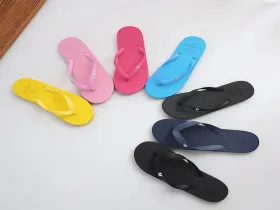
Polishing blocks rarely travel alone on a purchase order. The same EVA moulding and printing lines behind our wholesale EVA nail products also cover the rest of a teaching kit: EVA toe separators, washable and disinfectable on both sides, and bulk pedicure slippers in a one-size, diamond-cut anti-slip sole for the practical-room floor. Buying blocks, separators and slippers on one order keeps consumables arriving together instead of chasing three suppliers across one term.
Send us your kit list. Tell us the course level, the number of students per intake and whether you need stock pieces this term or a branded set next term — we will tell you which route costs less. Call or message +86 13827489472, email sales@fulikaisz.com.cn, or send your enquiry through our message page.