Custom EVA Footwear / Artwork Ownership
A retailer's branded summer capsule usually has one artwork file and four different vendors. Flip-flops, tote bags, towels and packaging all pull from the same logo master, and every vendor asks for "print-ready artwork" before quoting. The question that decides who pays for plates, molds and reprints is not whether the buyer owns the logo. It is who owns the placement artwork: the file that says where the mark sits on a 26 cm EVA sole, how large it is, which process applies and what the approved result looks like.
What the buyer should own, and what the factory keeps
Ownership of the trademark does not transfer when a buyer sends a vector logo to a factory. What transfers, in practice, is the right to use that artwork on the ordered goods - and that right has to be written down. A clean line to draw before the first sample:
- The buyer keeps the trademark, the logo file and any brand guideline behind it.
- The factory keeps its own process know-how: foam formulation, color masterbatch recipes, heat-transfer plate design, cutting dies developed for unrelated jobs.
- Shared, and therefore defined in writing: the placement artwork - logo position and size on the sole or strap, hollow-cut versus embossed versus printed treatment, approved color standard, and the signed sample that becomes the quality reference for every later batch.
If a purchase order only says "logo as attached", then nobody has defined who owns the approved placement version. That gap is what turns a small revision into a change-order argument halfway through production.
Why EVA flip-flops make this question sharper than a tote bag
On a canvas tote, one screen-print position covers the whole program. On an EVA thong sandal, the same logo can be executed in several different ways, and each route has its own tooling, cost line and approval step.
| Logo treatment on custom logo EVA flip-flops | Where it sits | Tooling or setup the buyer is paying for |
|---|
| Screen printing (silk screen) | Strap, footbed or sole edge | Screen per color and position |
| Heat-transfer printing | All-over or partial print on the upper | Transfer plate; multi-pass white base when the foam color is dark |
| Epoxy coating on the strap | Thong strap surface | Coating tooling for the strap shape |
| Custom mold fabrication | Embossed or debossed mark in EVA | Mold development for that geometry |
| Hollow-cut logo | Cut through the sole, so the mark prints on sand and pool decks | Cutting die or laser path for the cutout |
Our own hollow cut logo flip flops case shows why the placement drawing matters more than the logo file. A cutout mark has to survive foot pressure, bending and water; its position relative to the toe post and the load line of the foot is a manufacturing decision, not a graphic-design one. The buyer supplies the brand mark. The factory's engineering decides how that mark reads once someone walks on it.
The same logic applies to printed uppers. Heat-transfer printing on EVA has no underlying base color showing through, and multi-pass white-base printing lifts color saturation when the foam itself is dark - which matters most on a custom logo flip flops program, where brand colors have to match a printed guideline. A graphic approved on a white background in a design file is not the same object as that graphic on teal or hot-pink foam. Whoever owns the placement artwork also owns the decision about whether a white base pass is needed - and that decision sits on the invoice.
A practical ownership split to put in the purchase order
Retail buyers sourcing custom promotional flip flops for a seasonal capsule usually get the cleanest terms when they separate three documents and name an owner for each.
1. Brand artwork - buyer's property, licensed to the order
The logo, wordmark and brand colors stay with the retailer. The purchase order grants a limited license: use on this order, this quantity, this destination market, no resale of marked goods to third parties. If the program runs through an agency or a promotional distributor, name that chain explicitly so the factory knows whose authorisation it is relying on.
2. Placement artwork - buyer approves, factory develops
Position, scale, process choice and color correction for EVA are produced by the manufacturer's engineering and design team, then signed off by the buyer. We review customer drawings or samples and return improvement suggestions, including linework detail that survives foaming and printing. That means the buyer is approving a factory-produced rendering, so the purchase order should state plainly that the approved rendering and the signed sample are the acceptance standard for the batch - and that the buyer may reuse them on reorders.
3. Production tooling - plates, dies and molds
This is where most disputes start. Print plates and cutting dies are paid for by the buyer but physically held by the factory. Two clauses settle it: who pays when a logo changes mid-program, and whether the buyer can move tooling to another supplier if they change factories. Generic terms usually say the factory retains the tooling while the account is active. If the capsule will be reordered across several seasons, ask for the tooling to be released on request after final payment.
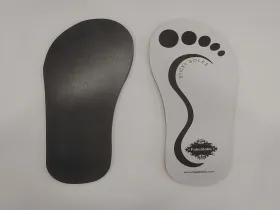
Sample plate cost and sample ownership. On printed EVA flip-flop programs the sample plate is a real line item - commonly a few hundred dollars per design, and quoted at 600.00 per design on our disposable EVA foam flip-flop specification, subject to the customer's artwork. Plate-making takes 5-7 days, and samples take 5-7 working days. Because that fee buys a physical artifact, state in writing whether the buyer may keep the approved sample and its plate for reorders, or whether the plate is scrapped at the end of the program.
The approval chain Fulikai runs, and where ownership is fixed
Our custom cooperation process has six steps, and each one touches a different piece of artwork. Knowing which step locks the file prevents rework charges later:
- Needs consultation and communication - buyer brief, target market, quantity, size range.
- Proposal and quotation - process route chosen, tooling fees itemised separately from unit price.
- Design drafts and renderings - the factory's first placement proposal. Buyer comments here are free; comments after sign-off are not.
- Mold opening and printing molding - plates, dies or molds are cut. This is the point of no return for the placement artwork.
- Confirmation of signature - signed sample becomes the acceptance reference for the whole order.
- 30% deposit on signing the contract, with the balance after pre-shipment inspection passes.
Once the signature step is complete, the signed sample governs. That is why retail buyers should treat it as a controlled document: keep the physical pair, photograph the label, and reference its date in every reorder PO.
Six questions to ask your factory before the capsule artwork goes final
- Which file do you need? Vector source for hollow-cut and embossed work; separated color layers for screen printing; a specified bleed area where the print wraps the sole edge.
- What is minimum feature size for a cutout mark in EVA? Thin strokes close together can bridge or tear once the foam flexes underfoot.
- Is there a white base pass, and does it change the plate count? Dark foam colors and saturated brand colors behave differently.
- Who holds the plates after delivery, and what does a logo revision cost mid-run?
- Which test reports cover this SKU in my market? Color fastness, tensile strength, ink environmental testing and children's-product safety are part of our 16 production tests; certification scope (CE, EN-71, FDA, FCC, RoHS, SGS, REACH) must be confirmed for the specific product, destination country and order before any compliance claim goes on retail packaging.
- If a licensed character or team logo is involved, who supplied the written authorisation? The factory needs evidence of the buyer's right to place that mark on goods.
Two cases where artwork ownership decided the schedule
Monster Jam cheering hands. A Zhejiang trading company came to us with a concept rather than finished artwork and entrusted full design and sample development. The build needed single-color screen printing, partial heat-transfer printing and double-sided stitching, so the quotation was higher than commodity alternatives. The buyer spent close to half a year comparing factories nationwide, using our sample as the quality benchmark, and came back with 25 days left before the event to place an urgent order for 80,000 pieces. Because the signed sample had already been fixed as the reference standard, we could ramp temporary labour and run two-shift production without re-opening design questions - full-volume delivery at agreed quality inside the window.
Skip Hop foldable bath puzzle. A US brand arrived in 2012 with a technical brief their long-standing supplier had declined: screen printing on one side, heat-transfer printing on the other, double-sided lamination with precise fitting, plus foldable packaging. After roughly half a year of failed sampling elsewhere, our R&D team committed to a sample inside one week and finished three days early. The brand's CEO visited the Shenzhen factory the same week and placed the order. In both cases the buyer owned the concept while the manufacturer owned the execution detail - and the signed sample, not the original brief, is what made production repeatable.
What a retailer should expect on lead time
For a branded summer capsule, work backwards from the shelf date. Plate-making runs 5-7 days and samples 5-7 working days. Bulk orders can be delivered within 15 days once approvals are locked, while printed disposable programs quote 25-30 working days after sample confirmation, adjusted to actual order conditions. Urgent runs can be absorbed by in-house capacity - our Shenzhen factory covers more than 3,000 square metres with foaming, cutting, stamping and laser lines - but only when the artwork is frozen. Every day spent arguing over logo placement is a day taken from that buffer.
On the receiving side, we support 100% third-party inspection and buyer audits, run full manual inspection before shipment, and hold audit reports from Coca-Cola, Walmart and Sedex. If the same capsule also covers salon or spa giveaways, treat bulk pedicure slippers as a separate SKU with its own signed sample: printed one-size foam slippers have their own plate and packaging approvals. Retail compliance teams should attach their own acceptance criteria to the signed sample reference so ownership of the standard is unambiguous.
Bring your placement artwork to a factory that will review it before tooling. Send your logo, target sole size and process preference, and our team returns a placement proposal with tooling costs itemised - whether you need custom logo flip flops, wholesale EVA flip flops in solid colors, or printed spa and pedicure slippers for the same capsule. With 19 years of custom EVA foam manufacturing behind us and exports to Japan, South Korea, Europe and the United States, we welcome retail buyers, advertising agencies, design firms and gift companies to start with a consultation.
Call or message Fulikai Custom Services on +86 13827489472, or send your artwork through our message page.