If your heated footwear line has been running for a couple of seasons, you already know which accessory variant quietly loses money. The question is not whether to drop it, but when the timing stops costing you more than the slow seller does. For brands consolidating accessories across orders, phase-out is a purchasing decision driven by remaining stock, battery and charger commonality, certification overlap and the next production window - not by a single bad month of sell-through.
What counts as a heated boot power accessory
Before setting a date, fix the scope in writing. In our Non-slip & Heated Footwear range, the power side of a heated boot program usually covers:
- Battery packs and pouches. The rechargeable heated winter boots listing specifies a 10000 mAh rechargeable battery, and the same capacity figure appears on our washable rechargeable heated insoles, which are sold as a separate accessory for the same cold-weather customer.
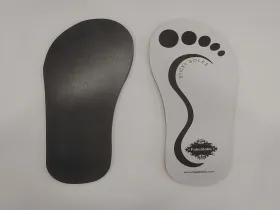
- Heated insoles as an accessory, not a boot. The insoles are trimmable to fit EU 34-46 and offer four temperature steps from 35°C to 65°C, while the boots list three steps. Two different control logics on one shelf is exactly the kind of variant sprawl a standardization project is meant to remove.
- Cables, chargers and controllers, plus the retail packaging that carries them.
- Spare-parts SKUs you promised retailers or distributors for a defined service period.
Write each of these down with its SKU, its supplier and the order it was last included in. Brands that skip this step tend to retire a boot model and discover the accessory obligation afterwards.
Four signals that the phase-out clock has started
Most buyers we work with act on a combination of these triggers rather than one number:
- The accessory no longer shares parts with the core SKU. Once boots and insoles run on different temperature steps or different battery capacities, each accessory needs its own test file, its own packaging insert and its own after-sales script.
- Slow sell-through is being subsidised by minimum orders you cannot resell. A variant that clears one purchase order a year still consumes the same supplier coordination as a fast one.
- The next boot production window is close. Accessory decisions have to be locked before the boot order is cut, because the accessory usually ships with it.
- Certification work is duplicating. If the low-selling variant needs its own test report while the standardised one already has coverage, you are paying twice for the same market access. Our Shenzhen factory holds ISO 9001:2015 and CE, EN-71, FDA, FCC, RoHS, SGS and REACH certifications, and material selection follows the destination country's requirements - see EVA foam quality control and raw material standards.
Timing it against your remaining stock and next order
Work backwards from the boot order you are about to place, then check what the accessory inventory can actually absorb. Fulikai's published lead times - 5 to 7 days for plate-making and bulk delivery within 15 days - mean an accessory change can move quickly once it is approved; the delay almost always sits in your own approvals and in leftover stock you still have to place somewhere.
| Remaining accessory stock | Practical phase-out route |
|---|
| Covers one full season or less | Stop reordering now. Let the next boot order ship without the variant, and sell the balance through clearance or bundled promotions. |
| One to two seasons of cover | Freeze new purchase orders, then map the stock into replacement boot sizes so nothing becomes dead after the switch. |
| More than two seasons, or committed spare-parts cover | Keep the SKU alive as a service-only line with no marketing support, and set a fixed end date tied to your contractual service period. |
| Private-label packaging still unprinted | Rework the packaging first. Neutral packs can often be re-labelled for the standardised accessory instead of scrapped. |
Do not let a certification gap set your date. If the surviving accessory needs new testing or a different raw material for your market, start that conversation before you announce the phase-out. A retirement plan that outruns its compliance work creates shelf gaps you did not budget for.
Standardising accessories across orders without breaking retail
A standardised accessory programme only pays if the surviving item can be specified once and reused. Two things decide that:
- A single power specification. Pick one battery capacity, one set of temperature steps and one control interface, then write them into every boot order. Where a supplier offers both boots and washable rechargeable heated insoles, that shared specification is the cheapest consolidation available.
- Packaging designed for reuse. If the accessory pack carries a model name, every boot change forces new printing. Neutral packs with a removable insert let you keep one print run across seasons.
For branded accessories and printed retail packaging, our custom EVA foam manufacturing service covers stamping and laser cutting from your drawings or samples, heat-transfer printing with multi-pass white base for stronger colour coverage, and design review before tooling. The published workflow runs through requirements consultation, proposal and quotation, design drafts and renderings, mould opening and print moulding, signature confirmation and a 30% deposit on signing - details in the custom product order process.
A note on the specification figures. Battery capacity, temperature steps and size ranges quoted above follow the individual product pages linked in this article. Those pages do not always use identical wording between the title and the parameter block, so confirm the exact specification for your order and market with us before you print packaging or sign a service agreement.
A 60-day sequence you can actually run
- Days 1-10 - Audit. List every power accessory SKU, its stock cover in months, its test reports and the orders it belongs to.
- Days 11-20 - Decide. Name one surviving specification and one retirement date. Put the retail commitments that block that date on the same page.
- Days 21-35 - Confirm with the supplier. Verify material compliance for the destination country, confirm packaging reuse, and request samples of the standardised accessory against your current boot lasts.
- Days 36-50 - Place the first consolidated order. Include the accessory in the boot purchase order rather than as a separate follow-up line.
- Days 51-60 - Close out the variant. Redirect remaining stock to clearance, replacement sizes or service channels, and update your retailer-facing spec sheet so nobody reorders the retired item.
Planning an accessory consolidation? Send us your current boot specification, the accessory SKUs you want to retire and your destination market.
Custom EVA foam manufacturing and sample support are available through our Shenzhen factory, which supports third-party inspection and customer factory audits - see
factory audits and inspections. Full catalogue at the
Sample Center.