A first season tells you whether waterproof heated snow boots sell. A second market tells you whether your size curve was ever right in the first place. The boot that moved well in one country can sit unsold in another, not because the heating failed, but because feet, socks, work habits and return policies changed with the border. Below is how purchasing teams at cross-border sellers, outdoor retailers and industrial distributors plan repeat boot sizing before they commit a second order.
Start from your own returns, not from a foreign size chart
Before you place the first purchase order for a new market, pull three numbers from wherever you already sell heated footwear: which sizes carried the highest return rate, which sizes sold out first, and how many returns cited fit rather than function. That data is worth more than any published conversion table, because it reflects your brand's lasts, your lining thickness and the socks your buyers actually wear.
Then compare those numbers with the destination market. A buyer in a cold coastal city commutes on foot and stands in transit; a buyer in a colder inland region wears the boot for longer stretches with heavier socks. Same boot, different fit expectation. If your first-market curve was built around EU 39-46 and the new market leans toward larger sizes with thicker socks, repeating the same buy will leave you holding short sizes at a discount.
Treat heating zones as part of the sizing question
Heated footwear is not a standard boot with a battery added. Where the heat element sits changes how much room a foot needs, and that is why two similar-looking boots on the same shelf can fit differently one size up.
- A waterproof electric warm snow boot with three heat settings heats the toe and instep, with adjustable levels commonly set at 45, 55 and 65 degrees Celsius. Because the element sits close to the front of the foot, a size that feels acceptable in a non-heated winter boot can feel tight once the lining compresses.
- A rechargeable heated winter boot pairs a forefoot heating zone with a rubber and MD outsole that carries stainless-steel ice grips, and is listed in an EU 39-46 range. Ice-grip soles are stiff, so length allowance matters more than width.
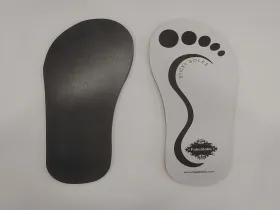
- A washable rechargeable heated insole is the cheapest way to test a new market without committing to a new last. These insoles are trimmable across EU 34-46, with four temperature levels and full-sole heating, so they let you serve sizes you have never tooled for.
For a second-market launch, that third option is often the smartest first order: insoles move across size boundaries with almost no tooling risk, and they tell you which sizes in your boot line are worth opening.
Build a size curve you can reorder against
Most sizing mistakes on a repeat order come from reusing the first order's split instead of rebuilding it. Write the curve down as a document your factory can work from, not as an assumption in a spreadsheet tab.
| Decision | What to lock before the second order |
|---|
| Size range | Confirm which EU sizes you will stock, and whether the same tooling covers them. Some heated boot models are offered in a narrower band per colourway, so a colour change can quietly cut off the top or bottom of your curve. |
| Half-size strategy | Decide whether you add half sizes or handle fit with an insole. Heated boots with fixed forefoot elements usually gain more from a trimmable heated insole than from another tooled half size. |
| Sock allowance | State the intended sock thickness on the size card and keep it identical across markets. Change the sock recommendation, and every existing fit comment becomes useless. |
| Reorder trigger | Set a sell-through threshold per size band that releases the next buy, so short sizes are reordered in season rather than after stockouts. |
| Returns handling | Decide what happens to a returned heated boot: refurbish, strip for spares, or scrap. Battery-bearing goods cannot be handled like a plain textile return. |
Change the fit, not just the label
A size sticker is easy to localize; the last underneath it is not. When you adapt boots for a new market, ask your manufacturer what can realistically change between orders and what cannot.
- What usually changes cheaply: lining depth, insole thickness, colour, print, packaging insert, and the wording on the size card. These adjustments let you move a boot half a step roomier without new steel.
- What needs tooling: upper shape, sole mould, heating-zone placement. Budget plate-making time for these rather than assuming a mid-season change is free.
A custom EVA foam manufacturing partner that works from your drawings and size card can usually handle the first group in-house, which matters when a second market needs its fit corrected before the next container rather than after it.
Compliance for battery goods is a sizing question too
Rechargeable heated boots and insoles ship with lithium batteries, and every market you enter has its own documentation and handling requirements for those cells. The practical impact on planning is timing: certificate and test-report lead time sits in front of production, not beside it.
Ask your supplier which certificates and test reports exist for the exact model, battery specification and destination country you are ordering. A report covering one boot's cell does not automatically cover a different cell in a different market. Confirm the paperwork before you confirm the size curve, so certification never becomes the reason you miss the season.
The same rule applies to materials claims. Our Shenzhen factory is certified to ISO 9001:2015 and holds CE, EN-71, FDA, FCC, RoHS, SGS and REACH certifications, and we recommend raw materials that match the standards of the destination country you tell us about. What counts for your listing depends on product, market and order, so request the specific document rather than relying on a general claim.
Order the second run in two tranches
Repeat sizing works best when you split the buy. Commit to the sizes your first-market data supports, and hold a smaller tranche for the sizes you are guessing at. Plate-making takes 5-7 days and bulk orders can be delivered within 15 days, so a mid-season adjustment is normally possible if you place it before the curve collapses rather than after.
Two checks protect that flexibility. First, confirm with your factory which sizes stay open for reorder after the initial run. Second, plan inspection into the second tranche, not only the first: heated footwear goes through production testing and full manual pre-shipment inspection, and third-party inspection is supported, so a new market's order does not have to inherit unverified quality.
A short pre-launch checklist
- Pull return reasons by size from the first market before touching the second order.
- Write one size card with sock allowance, heating zone and fit notes; use it in both markets.
- Test the new market with trimmable heated insoles before tooled boot sizes.
- Confirm battery documentation for the exact cell and destination country early.
- Split the buy: proven sizes first, experimental sizes held for a mid-season tranche.
- Agree reorder windows and inspection scope with your factory in writing.
If you are preparing heated footwear for a second market, send us your size curve, target retail channel and destination country.
Wholesale rechargeable heated footwear is available with private-label options, and our team can advise on fit adjustments that do not require new tooling. Contact us at
Contact Us or call +86 13827489472.