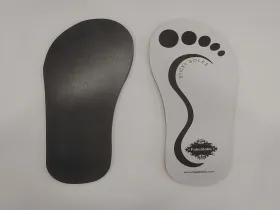
A seasonal program for EVA frame flip flops usually starts with a buyer's own shape drawing and ends with steel in the factory. When the next season arrives, the question is not whether the sandals sold, but who controls the lines that produced them: the artwork, the cutting die, the press mould and the print plate. This article explains how those assets are separated, what a buyer should have in writing before the first order, and how an existing tooling set shortens a reorder.
The drawings and the hardware are two different things
A frame flip-flop order carries at least four separable assets. Confusing them is the most common cause of disputes on a second season, because the buyer assumes everything in the factory belongs to them while the supplier assumes the hardware is theirs.
| Asset | Where it originates | What it controls on a reorder |
|---|
| Shape drawing / artwork file | Buyer's design team, or the supplier's draft stage | The outline, footbed shape and strap position of every pair |
| Cutting die or stamping tool | Made from the drawing before production | Whether the sole can be cut to the same silhouette at all |
| Press mould | Opened during the mold opening and print molding stage | Footbed thickness, texture and any embossed or hollow-out logo |
| Print plate or film | Plate-making for heat-transfer or screen printing | The artwork on the upper, including colour separations |
The drawing is a design document. The die, mould and plate are physical production assets that occupy storage space, wear out with use and can be reconditioned. A buyer who paid for them through a tooling line on an invoice has a commercial claim; a buyer who only sent a PDF has one over the artwork and little else. That distinction should appear in the contract or purchase order, not in an email thread.
Where ownership is settled: before the deposit, not after
The published custom EVA product order process at Fulikai runs through needs consultation, proposal and quotation, design drafts and renderings, mold opening and printing molding, confirmation of signature, and a 30% deposit on signing the contract. Ownership terms belong in the paperwork that sits between the quotation and the signature.
- State the tooling charge separately. If the die, mould and plate are paid for by name on the quotation, they are buyer-funded assets. Folded into a unit price, they read as supplier overhead.
- Name the assets in the contract. List the drawing number, the tool or mould reference and the plate reference so a reorder can point to them directly.
- Record who made the design change. When the factory's team reviews drawings and offers improvement suggestions on details such as linework, the revised file should carry a version number and a date. The buyer approves it; the record shows which revision is now binding.
- Set a storage period for the hardware. Ask how long dies, moulds and plates are kept after the last shipment, and what happens if the program goes quiet for a year.
- Agree on logo handling. A hollow-cut or embossed brand mark is trademarked artwork. The buyer keeps those rights regardless of who cut the tool, and the factory needs written permission to run it.
A practical rule: whoever pays the separate tooling line normally controls the hardware, and whoever drew the shape controls the design. Put both facts in writing before the 30% deposit moves, and the second season becomes a purchase order instead of a negotiation.
What existing frame tooling actually changes on a reorder
Once the die, mould and plate for a frame silhouette already exist, a seasonal repeat skips the front end of the workflow. The buyer is not opening new hardware; they are changing what runs through it.
- Colour. Colour is formed during one-step foaming with added masterbatch, so a new seasonal palette does not need new tooling. Tell the factory the destination country and ask which raw materials meet that market's standards.
- Upper artwork. A new graphic means a new plate, not a new mould. Plate-making is quoted at 5 to 7 days at Fulikai, with sample plates at a comparatively low cost, so a print refresh can be approved quickly.
- Strap and logo treatment. The EVA frame flip flop specification pairs a coloured EVA sole with PVC, rubber or fabric straps. Logos go on the strap through screen printing, epoxy coating or custom mould fabrication, and hollow-cut logos are made in the sole.
- Size range. Adult and children's sizes are available for this style, so a season can widen the size curve without touching the shape drawing.
- Lead time. With hardware in place, bulk orders can be delivered within 15 days at Fulikai. That is the practical payoff of keeping the tooling set intact between seasons.
The limits are equally clear. Change the footbed outline or the strap geometry and the die is a new cost. Change the embossed depth or a hollow-out pattern in the sole and the mould is a new cost. A print-only change is the cheapest seasonal update because it touches only the plate.
A reorder checklist for buyers
- Pull the original drawing revision that was signed off, and confirm the factory is cutting to that same revision rather than the last file anyone emailed.
- Ask for the tool, mould and plate references on file, plus a photograph of the sample made with them.
- Confirm how long the hardware has been idle and whether it needs reconditioning before the run.
- Send colour targets by Pantone or physical swatch, and state the destination market so raw material selection follows that standard.
- Re-issue written permission for any logo, character mark or licensed artwork on the new season's print.
- Put inspection expectations in the order: Fulikai supports third-party inspection and carries audit reports from Coca-Cola, Walmart and Sedex, which helps buyers whose own compliance team requires documentation.
Frequently asked questions
If the factory drew the shape for us, can we take it to another supplier?
Design ownership follows what was agreed at draft stage. Fulikai reviews customer drawings or samples and suggests improvements; where a buyer supplies the artwork, the buyer owns it. Where the factory develops an original silhouette, the contract should say plainly whether that design is exclusive, licensed or free for the buyer to reuse. Settle this before paying for hardware.
Do we pay tooling again on a second order?
Not if the same silhouette and the same footbed geometry are running. A print refresh needs a new plate at plate-making cost, and a colour change needs neither die nor plate. New charges appear only when the shape or mould features change.
What documents should a buyer keep on file?
The signed drawing revision with its version number, the quotation showing tooling as a separate line, the signed sample approval, and written logo permission. Those four items answer almost every ownership question that comes up on a seasonal reorder.
Talk to the factory before you sign
Fulikai is a Shenzhen EVA foam products manufacturer working on OEM and ODM programmes for retail, promotional and gift buyers. Their team reviews submitted drawings and returns improvement suggestions before tooling opens, which is the right moment to fix ownership terms in writing rather than after a season has shipped.
Send your frame shape drawing, target colours and logo files to discuss tooling scope and a seasonal reorder schedule for custom promotional flip flops: +86 13827489472, [email protected].