Switching EVA foam suppliers rarely fails at the sampling stage. It fails in week six, when the tooling is approved, the purchase order is signed and the factory that quoted you cannot confirm a ship date. The practical question is not "can this plant make my part?" but "can it still make my part in the month I need it, while holding its other commitments?" That is backup production capacity, and it is what separates a smooth supplier change from a missed retail season.
Why backup capacity matters more than the sample
A pre-production sample proves process capability at one moment in time. It says nothing about queue depth, shift coverage or how much of the line is already sold to another customer. EVA foam work adds a second variable: most custom items carry tooling and print plates that belong to the order, so moving a job mid-programme is slower and more expensive than re-cutting an injection moulded part at a second plant. Buyers switching providers therefore need evidence of reserve capacity in the factory they are about to sign with, not just a good sample from it.
The useful definition is narrow: backup capacity is the production time a factory can release on short notice, on its own equipment, without displacing orders already in the queue. Everything below describes how to verify that with documents and questions you can ask in a first call.
Step 1: Map the process steps you actually depend on
EVA foam products pass through a chain of distinct operations, and your delivery date is set by whichever one the factory outsources. Before assessing any EVA foam products manufacturer, list the steps your item needs:
- Foaming and sheet production, including colour formed during foaming with masterbatch
- Cutting, stamping and laser processing for the part profile
- Lamination or bonding where two layers or a foldable construction is required
- Printing, whether screen printing, heat transfer or pad printing, plus plate-making
- Assembly, packaging and final inspection
Ask directly which of these steps happen inside the factory walls and which are sent to a partner. A plant that owns foaming, cutting and printing can re-sequence your job around other work; one that buys in printed sheets or outsources plate-making cannot, because its bottleneck sits with a third party it does not control. A custom EVA foam manufacturing operation with in-house lines for foaming, cutting, stamping and laser processing is the configuration that gives a buyer schedule flexibility.
Step 2: Ask for numbers you can cross-check
Vague assurances about capacity are worth nothing. What carries weight is a set of figures that you can test against your own order size and calendar, and then check again in the audit or on the video call.
| Question to ask | Answer that holds up | Red flag |
|---|
| Factory floor area and number of production lines | A stated area with a line list by process, matching what you see on the floor or on camera | Floor area quoted only in marketing copy, no line inventory |
| Typical plate-making lead time | A stated range, with the reason for the upper bound | "As fast as possible", with no number attached |
| Bulk production and delivery window for your item | A defined window tied to a signed deposit and approved artwork | A single optimistic figure that never changes regardless of quantity |
| How urgent orders are handled | An explicit statement that resources can be reallocated inside an in-house factory | Urgency answered only by air freight offers |
| Who tracks your order once it is placed | A named person responsible for full-process tracking | Handover between sales and production with no owner |
A factory that publishes its own service levels gives you a baseline to hold it to. Fulikai, a Shenzhen plant working on custom EVA foam since 2008, states plate-making in 5-7 days and bulk delivery within 15 days, with flexible resource allocation inside its own factory for urgent orders and dedicated staff tracking each order through the process. Those are checkable commitments rather than adjectives, which is exactly what you want written into a purchase contract.
Step 3: Test the inspection queue, not just the production line
Capacity failures show up late in an order because finishing and inspection are usually the thinnest part of the operation. A factory can foam and cut a full container of product and still miss its date because there are not enough hands to inspect it. Ask how many tests run during production, what happens before shipment, and whether third-party inspection is supported.
Concrete answers here also tell you about quality discipline. Fulikai reports 16 types of test across production, covering colour fastness, tensile strength, ink environmental testing and children's product safety, with full manual inspection before shipment and support for 100% third-party inspection. The factory states an average defective rejection rate above 10%, which is the kind of unflattering number a plant only publishes when its screening genuinely runs: a low rejection figure would suggest defective units are reaching the packing stage instead of being caught.
For buyers under retail or brand audit requirements, ask which audit reports already exist and whether buyer-conducted audits are welcome. Existing reports lower the cost of qualifying a new supplier, because part of the groundwork is done. Fulikai cites Coca-Cola, Walmart and Sedex audit reports, and its Shenzhen site is certified to ISO 9001:2015 with CE, EN-71, FDA, FCC, RoHS, SGS and REACH documentation on file.
Capacity questions to send before your first sample request
- Which process steps are in-house, and which are subcontracted?
- What is the current queue position for a job of my quantity?
- Plate-making time, print plate cost, and who owns the plates afterwards?
- Bulk production window from signed deposit to ready goods.
- How many inspection staff, and can third-party inspectors enter freely?
- Which audit reports exist, and can we schedule an audit before the first order?
Step 4: Check whether the factory has capacity in your product family
A plant can have spare hours on the wrong equipment. Ask for evidence that similar items run there regularly, because repeat production of one product family is what builds up tooling knowledge, colour recipes and print settings that protect a schedule. A supplier cataloguing dozens of product lines across toys, footwear, nail care and water sports has breadth; one that can name finished work in your category has depth.
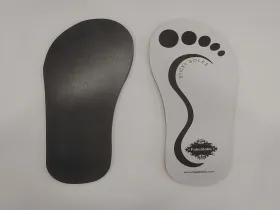
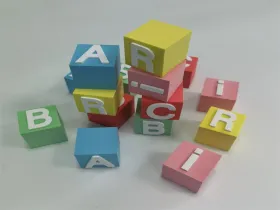
Review the published wholesale EVA foam products range against your own specification. Bath puzzles, alphabet and number sets, flip-flops with printed or cut-out logos, cheering hands, traction pads, kneeling pads and heated footwear all run through the same foaming, cutting and printing chain, which means a change of artwork inside one family reuses existing process knowledge instead of starting from scratch.
Step 5: Keep a second qualified supplier live
The cheapest insurance in EVA foam sourcing is a second factory that has already quoted your specification, even if you never place the order. Run plate-making and one sample round with both suppliers before committing volume. You then know two prices, two lead times and two real capacities, and a delay at one plant becomes a conversation about timing rather than a scramble for a new vendor.
Structure the main order so that switching remains possible: approve artwork and plates in writing, keep tooling ownership explicit, and split a first large programme into staged releases. A published custom order process that ends with a 30% deposit on signing gives you a natural checkpoint to confirm capacity one final time before money moves.
What to write into the contract
- Plate-making and bulk delivery windows as dated commitments, with the trigger event defined (signed deposit, approved artwork)
- A named contact responsible for order tracking and weekly status reporting
- Right of entry for your inspector or a third party at any production stage
- Written notice if the factory plans to move any process step outside its own site
To check capacity against your own specification, send drawings or samples with target quantity and required ship date. Shenzhen Fulikai Packaging Products Co., Ltd. works from customer drawings and samples across custom shapes, colours and printed designs, with a quoted 5-7 day plate-making window and bulk delivery within 15 days. Call or message +86 13827489472, write to
[email protected], or use the
inquiry form. The factory is at 5th Floor, Building B, Yuanfen Industrial Zone, Dalang Street, Longhua District, Shenzhen.
Lead times, test counts and certification records described above follow the figures published by the manufacturer on its own site. Confirm the applicable certificate or test report for your product, destination market and order quantity before relying on any compliance claim.