A bundled quote for heated snow boots usually arrives as one number per pair. That number hides at least four separate cost blocks: the boot itself, the battery and heating assembly, the tooling behind any custom logo or colorway, and the packing needed to move lithium batteries across borders. Before you accept a quotation, ask each supplier to break those blocks apart in writing. The comparison below shows what to request and why it changes your landed cost.
Working assumption for this article: the boots are sold as a complete pair with a rechargeable battery pack, in carton quantities destined for retail or e-commerce fulfillment. Battery capacity, heating zones and size runs vary between models, so every figure must come from the supplier's own specification sheet.
1. Ask what the sample price covers before you pay it
A heated boot sample is not one item but an assembly. When a wholesale rechargeable heated footwear supplier quotes a sample, ask them to state in the same email which of the following are included and which are billed separately:
- The boot upper, lining and outsole as specified, including whether the anti-slip ice grips are fitted or supplied loose.
- The battery pack, charger and cable, plus the shipping method used for a battery-containing parcel.
- A blank sample versus a sample carrying your logo, print or colorway. A decorated sample tests your artwork; a blank one only tests the platform.
- Whether the sample fee is credited back against the production order, and at what quantity that credit applies.
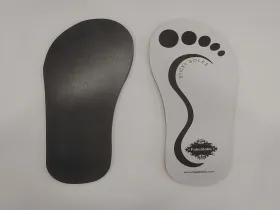
For printed decoration in EVA foam components, plate-making is a separate charge. On our own custom EVA foam manufacturing page we state that plate-making takes 5 to 7 days and that sample plates cost only a few hundred dollars. Ask any supplier for the same three data points: plate fee, plate lead time, and whether the plate is reusable on reorder.
2. Ask how tooling and mold costs are split from unit price
Custom shapes in EVA foam require cutting dies or molds. Our published cooperation process runs through needs consultation, proposal and quotation, design drafts and renderings, mold opening and printing molding, signature confirmation, and a 30 percent deposit on signing the contract. That sequence is a useful checklist for any boot program too, because it forces the tooling decision onto paper before money moves.
Put these questions in your request for quotation:
- Is there a mold or die charge for your custom part, and is it amortized into the unit price or invoiced once?
- Who owns the tooling after payment, and can it move to another line or factory if capacity is short?
- What changes to size range, upper material or heating zone would create a new tooling charge?
Two heated boot models on our site show why this matters. The rechargeable heated winter boots list a micro-suede upper, forefoot heating zone and a 10000 mAh battery in EU sizes 39 to 46. The waterproof electric warm snow boots with three heat settings list a bonded leather upper, short plush plus sponge lining and retractable stainless-steel ice grippers, with colorways in EU 39 to 45 grey and EU 36 to 41 wine red. Those are different uppers, different heating zones and different size ladders. A quote that treats them as one SKU will misprice both.
3. Ask for case pricing by size run, not a single average
Footwear costed on a blended average looks competitive and then disappoints at the invoice, because small and large sizes consume different quantities of material and last time. Request the price broken down by size ratio, and confirm who sets that ratio. A supplier quoting EU 36 to 46 with an assumed bell curve is not offering the same deal as one quoting your actual assortment.
| Line item to request | Why it changes your landed cost |
|---|
| Unit price by size or size group | Removes blended-average surprises when you order a real assortment. |
| Pairs per carton and carton dimensions | Determines volumetric weight; a taller boot box can consume a whole pallet position. |
| Battery packing configuration | Batteries shipped inside equipment and shipped loose fall under different handling rules and freight classes. |
| Sample fee, plate fee and mold fee shown separately | Lets you compare two suppliers on the same basis instead of comparing one bundled number against another. |
| Payment terms and deposit percentage | A 30 percent deposit on signing is our published term; confirm the balance trigger, whether it is on inspection or on bill of lading. |
4. Ask what the battery specification actually says
Battery capacity drives both warmth and freight cost, so it belongs in the pricing discussion rather than only in the marketing copy. Our washable rechargeable heated insoles describe a 10000 mAh pack with four temperature levels from 35 to 65 degrees Celsius, a stated runtime range of 10 to 24 hours, trimmable sizing for EU 34 to 46, and a frost-resistant wire rated to minus 40 degrees Celsius. The heated winter boots listed at sample-center page 238 also cite a 10000 mAh pack with three-level temperature control. Take these figures as examples of what to demand in writing, not as interchangeable specifications: heating zone, level count and runtime are model-specific.
Ask the supplier to name the battery capacity, the cell certification they can produce for that cell, the charger standard for your destination market, and whether spare packs ship in the same carton. Each answer affects packaging, documentation and freight.
5. Ask which tests and inspections sit behind the price
A lower unit price often means fewer checks inside the factory gate. Our quality-control page describes a Shenzhen factory of over 3,000 square meters certified to ISO 9001:2015, holding CE, EN-71, FDA, FCC, RoHS, SGS and REACH certificates, with 16 types of tests during production, full manual inspection before shipment and support for third-party inspection. It also records factory audit reports from Coca-Cola, Walmart and Sedex. Certificate scope is product- and market-specific, so ask which certificate or test report applies to the exact boot, battery and destination country you are buying; do not assume a factory-level list covers your order.
Useful questions: which of those 16 tests apply to heated footwear, whether color fastness and tensile strength testing cover the upper material you selected, and what the supplier does with items rejected at final inspection. Our own page states an average defective rejection rate above 10 percent, which tells a buyer how much sorting capacity sits behind the quoted price.
6. Ask about lead time as three separate clocks
Winter footwear fails on timing more than on price. Split the schedule into plate-making and tooling, bulk production, and shipping, and get each date in writing. We state 5 to 7 days for plate-making and delivery of bulk orders within 15 days, with flexibility for urgent orders because the factory is in-house. Ask any supplier the same three questions: when can plates be approved, how many days from deposit receipt to finished goods, and what happens to that date if the battery pack arrives late from the cell supplier.
A short comparison checklist
Send every bidder this list and you will get numbers you can actually compare. Request sample price with inclusions, plate fee and lead time, mold or die charge and ownership, unit price by size group, pairs per carton with carton dimensions, battery capacity and certification documents, applicable test reports for your market, deposit percentage and balance trigger, and production days counted from deposit receipt.
If a supplier answers all nine items in one email, the bundled quote becomes a set of line items you can negotiate. If they answer with one number per pair, you are buying an assumption.
Fulikai is a Shenzhen
EVA foam products manufacturer producing custom OEM and ODM goods since 2008, including non-slip and heated footwear. Send your drawings, samples or target retail price through our
message page, or call +86 13827489472 for a line-item quotation.