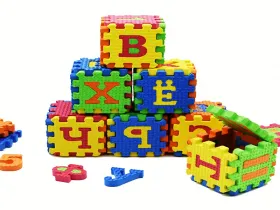
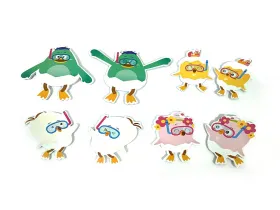
A supplier corrective action request (SCAR) about print rub resistance on a princess-themed EVA bath puzzle only works when the buyer and the factory are describing the same defect, the same test and the same acceptable result. This guide shows how to write that request for an EVA bath toy order: what evidence to attach, which process details to name, and which remedies to ask for so the answer comes back in days rather than weeks.
Start with the defect, not the complaint
"The printing rubs off" is not actionable. A supplier can act on a description that states where the print sits in the structure, what removed it, and how much of the batch showed it. For an EVA bath puzzle sold as a bathtub toy, three different observations lead to three different fixes:
- Ink sits on the surface and lifts under a fingernail or a dry cloth — an adhesion or curing problem in the print layer.
- Colour transfers onto skin, a towel or a light-coloured tile after soaking — a dye or ink fastness problem in wet use.
- Print cracks where the foam is bent or stretched at a fold line — a flexibility mismatch between the print film and the foam.
Name which one you saw. On a princess bath puzzle the same artwork often runs across two different production methods at once — screen printing on one face and heat-transfer printing on the other, with double-sided lamination holding the boards together. Rub resistance therefore has to be reported per surface, not per SKU.
Six elements a corrective action request needs
| Element |
What to write |
| Order reference | Purchase order number, production batch or lot code, and the delivery date. |
| Item identification | Product name, piece count per set (for example foam pieces, puzzle boards and mesh storage bag), and the artwork file name. |
| Defect definition | Which surface, which colour areas, and how the failure appeared — dry rubbing, wet soaking, or flexing. |
| Test method used | The rub or soak procedure you actually ran, including the cloth or pad, the number of passes and the drying time. |
| Extent of impact | Units inspected, units affected, and whether the sample approved before production showed the same behaviour. |
| Requested action and date | Root cause report, containment plan for goods already shipped, and a deadline for each. |
Describe the rub test you actually ran
Print rub resistance is only meaningful against a stated method. In the request, record four things so the supplier can repeat your result in their own plant:
- The rubbing medium — white cotton cloth, felt pad or a dry fingertip.
- The condition of the piece — dry after 24 hours of rest, or wet and then partially dried.
- The workload — number of passes over the same printed area and roughly how much pressure.
- The pass line — what counts as a failure, such as colour on the cloth or visible thinning of the print.
Colour fastness is one of the routine production tests an EVA foam factory should already be running, alongside tensile strength and ink material testing. Ask the supplier for their own record against your batch, so both sides can compare the incoming inspection result with the outgoing one.
Ask about the printing route by name
A generic request gets a generic answer. On printed EVA foam there are two common routes, and rub resistance behaves differently in each:
- Screen printing pushes ink through a mesh onto the foam. It suits large single-colour areas, and its durability depends on ink system, curing and how well the foam surface accepts the ink.
- Heat transfer printing on EVA foam transfers a printed film into the surface. A white base layer is often built up in passes so light colours stay saturated, and the film has to stay flexible with the foam when the piece is bent.
In the corrective action request, state which route was used on each face of the board, and ask whether the ink batch, the curing setting or the plate changed between the approved sample and the delivery. If a new plate was made for the order, ask when it was produced and whether it passed the same check as the original.
Tie the request to the foam, not only the ink
Rub failures on bath puzzles are frequently a surface problem rather than an ink problem. Two material points belong in the request:
- Colour formed during foaming with masterbatch behaves differently under abrasion than colour applied only on top of the sheet. Ask which method was used for the board colour, because it changes what a rub test should show.
- EVA grades differ in density and surface openness. A softer, more open cell takes ink differently, so ask the supplier to confirm the grade used for this batch against the grade of the approved sample.
For a toy that will be soaked, squeezed and stuck to wet tile, also ask for the current children's product test report covering the printed piece — EN-71 is the relevant safety standard for toys in Europe, and the applicable certificate should match the destination market of the order.
Set containment and rework expectations
Close the request with three practical asks, each with a date:
- Containment: hold the remaining stock at the factory and re-inspect it against the agreed rub method before any further shipment.
- Root cause: a written report naming the changed variable — ink lot, curing time, plate, foam grade or lamination setting — with the evidence behind it.
- Preventive action: a revised inspection step in the production run, so print adhesion is checked mid-run and not only at the end.
Factories that run full manual pre-shipment inspection can usually re-screen held goods quickly. Ask how many pieces passed and failed on re-check, and request the count in writing before authorising any replacement shipment.
Prevent the next claim during pre-production
The cheapest corrective action request is the one you never send. Before artwork goes to plate, agree in writing:
- the rub and soak test both sides will use, with the pass line stated in numbers;
- which printing route is used on each face of a laminated board;
- that the retained approved sample is the reference for colour and print, kept by both parties.
A wholesale EVA educational toys programme with several themed sets in rotation benefits most from this step, because one artwork file is often reused across themes and board sizes. Plate-making turnaround of a few days makes it realistic to re-cut a plate and reprint a sample rather than argue about a delivered batch.
What a good supplier response looks like
Within a few working days you should receive the root cause, the re-inspection count on held stock, and a proposed corrective step with an effective date. If the reply only says "we will be more careful", reopen the request and ask for the test record from your batch. A custom EVA foam manufacturing partner that already documents colour fastness and pre-shipment inspection has the data on file; a complete request simply tells them which records to send.
Need a second opinion on a printed EVA bath puzzle batch? Contact Fulikai with the artwork file, the printing route used and your rub test method, and we will review it against our own production records.