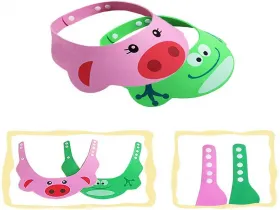
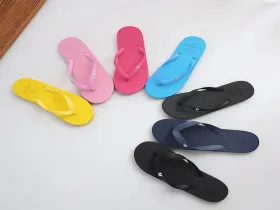
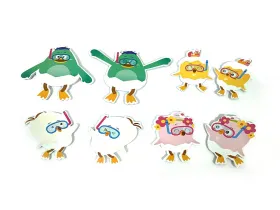
A retail buyer rarely says no to a single EVA design. They say it to the quotation that arrives with one mask shape, one hat shape and a price per style that was never explained. If you are preparing an assortment of EVA children's masks and EVA sun hats for a seasonal planogram, the number that decides whether you get shelf space is not your unit cost — it is the total landed cost of the whole mixed assortment, sampling included. This guide breaks that number down line by line so you can present it to a buyer with confidence.
Why a mixed assortment costs more than one design multiplied by two
Party masks and sun hats are sold together at the same seasonal moments — pool parties, beach holidays, kindergarten events, Halloween and birthday ranges. On the shelf they look like one programme. In a factory they behave like several small projects that happen to share a container.
Each design carries its own artwork review, its own cutting die or stamping tool, its own print plate, its own colour run and its own approval round. A mask made from coloured EVA sheet with an adjustable elastic strap and a hat built from EVA laminated to knitted fabric with a hook-and-loop fastener do not share a single process step after the raw foam is chosen. Multiply that by every additional character, silhouette or colourway in your assortment and the sample budget grows faster than most buyers expect.
This is exactly why custom EVA foam manufacturing quotations are structured per design rather than per order. Get that structure wrong and you will either over-commit capital to designs that never reach the shelf, or walk into a buyer meeting with an incomplete cost picture.
The five cost lines to price before you show anything to a retail customer
| Cost line | What it covers for masks and hats | When it repeats |
|---|
| Sample / plate fee |
Per design: cutting or stamping template, print plate, first physical sample. Mask pages list a sample fee of 600.00 per design subject to the customer's artwork; the Custom Capabilities page describes fast plate-making with a 5-day turnaround and sample plates priced at a few hundred dollars. |
Once per new design or major artwork change. Repeats for every character, hat shape and print layout you add. |
| Sample production time |
5–7 working days for these EVA items, from approved artwork to physical sample. |
Each approval round, each design revision. |
| Tooling and print moulding |
Mould opening and print moulding in the order process; stamping and laser cutting for shapes, heat-transfer or silk-screen printing for artwork. |
New silhouette, new size range or a print that needs a different plate. |
| Material and colour setup |
Colour is formed in one-step foaming with added masterbatch, so each foam colour is a production decision rather than an afterthought. Hat construction adds knitted fabric lamination and hook-and-loop fasteners; masks add the adjustable elastic strap. |
Every additional colourway across the assortment. |
| Compliance and inspection |
16 types of tests during production, covering colour fastness, tensile strength, ink environmental testing and children's-product safety; full manual inspection before shipment. Third-party inspection is supported. |
Per destination market and per product type — a kids' mask sold in the EU and one sold in Japan are not the same file. |
Read the numbers as ranges, not promises. Fees on Fulikai's pages are written per design and subject to the customer's artwork, and plate pricing is described as "a few hundred dollars" rather than a fixed figure. Treat every figure in your own costing sheet as a range until you have artwork in hand, then confirm it in writing with the factory.
Build the assortment budget in three tiers
Tier 1 — the presentation tier (what you spend before the buyer meeting)
Pick a small number of designs that prove the concept: two mask shapes and two hat styles is a common starting point. At the per-design sample fee on the mask listing, that is already four separate fees, plus plate-making for each printed artwork. Budget it as a presentation cost you accept in full — this is what lets a buyer hold the product instead of reading a spec sheet.
Use the 5–7 working day sample window deliberately. If your buyer review cycle is six weeks, samples that arrive in week one leave room for one revision round without moving your launch date.
Tier 2 — the approval tier (what changes after buyer feedback)
Retail feedback usually arrives as artwork tweaks: a colour swap, a bigger logo, a different strap or fastener. Each of those can re-trigger plate-making and another sample run. Put a named contingency in your budget for one revision round per design — not because the factory is slow, but because retail assortments are negotiated, and negotiation changes artwork.
Ask the factory's service team to review your drawings before you commit them. Shapes are produced by stamping and laser cutting from customer drawings or samples, and design input on details such as linework is part of the service — a line moved before tooling costs nothing, the same line after tooling costs a new plate.
Tier 3 — the production tier (what you commit once the order signs)
The published cooperation process runs from needs consultation and quotation through design drafts and renderings, mould opening and print moulding, signature confirmation, and a 30% deposit on signing the contract. For these EVA items the balance of 70% is due after pre-shipment inspection is passed, with production quoted at 25–30 working days after sample confirmation.
Plan your cash around those milestones, not around the invoice date. A mixed assortment signed as one contract still releases cash in two stages, and the second stage depends on an inspection you should schedule into your own calendar.
Where retail buyers actually push back — and how to pre-empt it
- "Your per-style price is high for a small order." Small runs across many designs are the classic cost trap. Consolidate where you can: one mask tooling with several printed artworks, or one hat base shape in multiple colourways, keeps design variety without multiplying tools.
- "Can you match this Pantone exactly?" Colour is created during foaming with masterbatch rather than painted afterwards, which is why matching should be agreed at sample stage. Bring the target colour reference to the first enquiry, not to the production order.
- "Is it safe for children?" Have the applicable test reports ready before the meeting — the site lists CE, EN-71, FDA, FCC, RoHS, SGS and REACH alongside ISO 9001:2015, but certificates are product- and market-specific. Confirm which report covers your exact item and destination country instead of quoting a certificate list.
- "Can you hit our promotional date?" Plate-making is quoted at 5–7 days and bulk delivery within 15 days on the Custom Capabilities page, while product pages quote 25–30 working days after sample confirmation. Those are different stages of the same calendar — present both to your buyer so the timeline looks credible rather than optimistic.
A worked example: four designs for a summer pool-party range
Take an assortment of two animal-face masks and two sun hats, all printed with one shared character theme. Costed honestly it looks like this: sample and plate fees for four designs; one round of revision plates after buyer feedback; tooling per silhouette; foam colour setup for the hat colours plus fabric lamination and fasteners on the hat side; elastic straps on the mask side; OPP bag packing per piece; and inspection time before shipment. What you present to the retail customer is a single landed cost per piece for the range, with the sample spend shown separately as a one-time development line.
That separation matters. Buyers approve programmes more readily when development cost is visible and finite, rather than buried in a unit price that looks inflated against a competitor selling one generic shape.
Five questions to send with your enquiry
- What is the sample and plate fee for each design in my assortment, based on this artwork?
- Which of these designs can share tooling, and what would that save me?
- Which test reports cover a children's EVA mask or sun hat in my destination country?
- What is the plate-making lead time and the production lead time for this mix, quoted separately?
- What payment stages apply once the assortment is signed — deposit and balance against inspection?
Before you show the range to a retail customer, your costing sheet should already contain:
- A per-design sample and plate line, not one blended average.
- A named contingency for one artwork revision round.
- Confirmed test coverage for each product type and market.
- Plate-making time and production time stated as separate figures.
- A deposit-and-balance schedule mapped to your own cash cycle.
Mixed assortments are where EVA foam programmes win shelf space and where they most often lose money. Price the design variety honestly, keep tooling count under control, and let the sample stage do its job before you commit production.