You placed the first run. The printed graphics looked right on the proof and right on the carton samples. Then the second order arrived, and three of your retail locations said the logo now reads a shade warmer than the shelf copy they already sold. Nothing in the artwork changed. What changed was how the job was produced, and how little the purchase order said about colour.
Colour drift on repeat EVA printing orders is rarely dramatic. It is a slight shift that is invisible against a phone screen and obvious against last season's stock. For buyers running the same printed EVA item through several distribution points, or launching it in two markets at once, that shift turns into returns, markdowns and awkward conversations with store managers. The fix sits in budgeting and paperwork long before the press starts.
Two colour systems, two different bills
The first cost decision on any printed EVA order is whether your artwork will be carried as solid mixed inks or as a photographic image. This choice drives the plate cost, not the quantity.
A screen-printed design is charged per colour station. A five-colour logo means five screens, five passes, five line items on the invoice. A heat-transfer printed design is charged for one engraved plate that carries all colours at once, which is why a busy full-colour graphic can cost less to tool than a three-colour flat logo.
On our heat transfer printing on EVA foam line we use self-developed heat-transfer technology with multi-pass white-base printing, so the foam colour underneath does not push through the image. On jobs where the artwork is flat solid colour — a single logo on a garden kneeling pad, a slogan on a cheering hand — screen printing stays the simpler route and gives a thicker ink layer.
Budgeting note: when you move an existing design from one production method to the other between runs, you pay the tooling again. Keep the method fixed for a product you intend to reorder, and quote both methods on the first order so the choice is made on price rather than on habit.
What plate-making actually costs, and how long it takes
Plate work is the line most buyers under-budget on a first order and forget entirely on a reorder. Our plate-making turnaround is 5–7 days, with a five-day service available at competitive pricing, and a sample plate runs to only a few hundred dollars.
| Cost item | Budget it as | Applies on reorder? |
|---|
| Sample plate for heat-transfer printing | One-time, a few hundred dollars per design | No — reuse the approved plate |
| Screen-making for each colour station | One-time, per colour | No — unless the artwork changed |
| White-base passes on dark or saturated foam | Per unit, scales with pass count | Yes — every run |
| Colour masterbatch in the foam | Per unit, not a printing charge | Yes — and this is where drift starts |
| New plate after an artwork revision | One-time again, full price | Only if you changed the file |
The trap: a revised logo, a moved element, or a designer who "just nudged the tagline" all trigger a fresh plate. Ask your design team to freeze the print file before you request a reorder quote, and put the frozen file version number in the purchase order.
Foam colour is not free — it is a separate charge you may be paying twice
Most colour complaints on printed EVA are not printing faults at all. They are foam faults. If the substrate shifts, the print on top of it reads differently even when the ink is identical.
We form colour during one-step foaming with added colour masterbatch, which means the body colour of your part comes from a batch decision made upstream of the press, not at it. The practical consequence for a multi-location buyer: matching print to print across runs is easy; matching foam batch to foam batch is where you need to spend money deliberately.
- Name the foam colour on the order with a physical reference, not a name. "Dark grey" means four different greys to four factories.
- Keep the masterbatch source constant across runs. Changing resin or masterbatch supplier between orders is the single most common cause of reorder drift.
- If your design prints on a light foam base, expect fewer white-base passes and a lower unit price than the same design on dark foam.
Our EVA foam color matching page covers how raw material is selected for a destination market. Tell us the country you are shipping into and we will recommend materials that meet the corresponding national standards, which also fixes the material specification for every later reorder.
Budgeting for several locations: the golden sample rule
Multiple locations multiply the problem because each location received its own stock, and each of those carts has its own opinion about what the product is supposed to look like.
- One signed reference per SKU, not per location. Approve a physical printed sample, sign it, date it, and keep one copy at your buying office. Every reorder is judged against that card, never against a unit from the previous container.
- Order all locations' quantity in one production run where lead time allows. Units printed in the same run share the same plate wear, the same ink batch and the same foam batch. Two runs six weeks apart do not.
- If you must split the order, split it by location at the packing stage, not by placing two orders. A single production lot divided into four cart sets gives every store the same colour.
- Hold back a small quantity of each run as an archive. Two or three units per run lets you prove to a store manager which shipment they are comparing, and gives your next reorder a second reference point.
Cost reality: this approach costs you almost nothing in tooling. It costs storage space and discipline. Compared with replacing mismatched stock across three stores, it is the cheapest line item in the whole budget.
Inspection lines worth paying for on a reorder
A reorder has one advantage over a first order: you already know what right looks like. Spend the inspection budget where drift actually shows up.
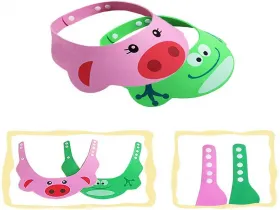
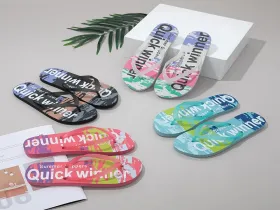
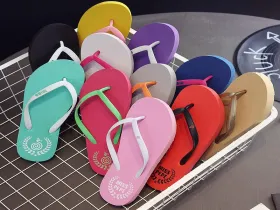
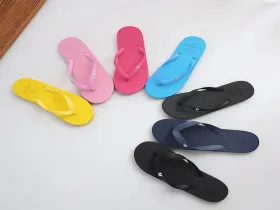
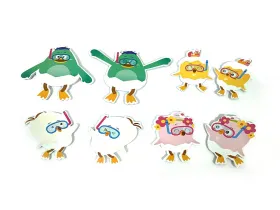
Every product we make passes 16 types of test during production, including colour fastness, tensile strength and ink material environmental-protection testing. Colour fastness is the one to ask about specifically on printed items that get handled, wet or sun-exposed — bath toys, beach flip-flops, pool game sets, outdoor cheering hands. A print that matches on day one and fades by week six fails a store's shelf test even though it passed yours.
Before shipment we carry out full manual inspection and reject defective items; our average defective rejection rate exceeds 10%. That rejection rate is not waste, it is the filter doing its job, and you should expect to see rejected units reported rather than quietly shipped. We support 100% third-party inspection and hold factory audit reports from Coca-Cola, Walmart and Sedex, so if your retail buyer requires their own inspector on site, budget the inspection day rather than discovering it at the dock.
A worked example: multi-colour printed cheering hands for an event series
Event merchandise is the hardest case for colour consistency, because the same design runs across a season of venues and each venue's stock sits next to the last one in photographs.
The Monster Jam custom EVA cheering hands we produced combined single-colour screen printing with partial heat-transfer printing and double-sided stitching. That combination is exactly where a low quote goes wrong: factories that cannot hold partial heat-transfer registration produce units that pass on a photo and fail in hand, which is why the client spent nearly half a year comparing manufacturers nationwide using our sample as the quality standard before returning to us.
When the event calendar closed to 25 days of production lead time, we ran 24-hour two-shift production to deliver the full order on time and to specification. Speed is available. What you budget for is the sample that defines the target — because on a series, every later run is measured against it.
A reorder checklist before you sign
- Print file version number stated in the purchase order, and unchanged since the last signed sample.
- Production method named: screen printing or heat-transfer printing. Not "logo as before".
- Foam colour specified by physical reference card, with batch or lot noted from the previous run.
- Signed golden sample referenced by date, one per SKU across all locations.
- Plate and screen reuse confirmed in writing — no new tooling charge unless you changed the file.
- Colour fastness test named in the inspection scope for any product that meets water, sun or heavy handling.
- Third-party inspection day scheduled and funded if your retail buyer requires it.
- All locations' quantity placed as one production lot, split at packing.
None of these lines is expensive. Every one of them prevents a cost that appears after the container has been distributed, when the only remaining option is to reprint.
Bringing it to a factory that already has your file
Send us the signed sample reference, the frozen print file and the quantity split across your locations, and we will quote the reorder with tooling reused, foam specification carried forward from the previous lot, and inspection scope set for how the product is actually used. Our Shenzhen factory runs complete production lines for foaming, cutting, stamping and laser processing, and bulk orders can be delivered within 15 days.
Talk to us about your reorder on custom EVA foam manufacturing, or send your requirements through our message page.