A bundle order is where third-party inspection quotes stop being comparable. One line item, one visit, one report — and suddenly the fee covers two products that do not look alike, do not test alike and do not fail alike. Buyers who price the visit as a single number usually discover the difference at the worst possible moment: on the factory floor, when the inspector starts counting defects on the part nobody agreed how to count.
The inspection fee is not one cost. It is an attendance charge, a workload charge and a re-check charge sitting in the same invoice line. This article walks through what to compare, line by line, when you put an EVA foam product together with something else on one purchase order.
Start from what the fee actually pays for
Most third-party inspection firms charge by man-day. A standard pre-shipment inspection covers a defined number of units per man-day, and the quote you receive assumes that scope. When you bundle, three things move at once:
- Attendance. Travel, accommodation and the on-site day rate. This part barely changes whether one product or three are in the carton.
- Workload. Cartons to open, samples to draw, measurements to take, functions to test. This scales with how many different SKUs you put in front of the inspector.
- Re-check. If a lot fails, someone re-inspects it. The cost of that second visit depends on what failed and whether the whole shipment is held.
A single-product quote hides all three inside one figure. A bundle quote should separate them. Ask for the split before you compare two firms, because a firm quoting a lower total may simply be planning to spend fewer hours on the second item.
The five line items that change when you add a second product
| Line item |
What to compare across quotes |
Why bundling changes it |
| Man-days quoted |
How many man-days, and how many units per man-day are assumed. |
Two products in one factory rarely share a sampling plan. If the quote keeps one man-day for both, expect thin coverage on whichever line has fewer cartons. |
| Sampling plan per SKU |
Whether each product gets its own sample size and its own accept/reject number, or one shared pool. |
A shared pool lets a clean line hide a defective one. A good quote names the plan for every SKU in the bundle. |
| Test scope per product |
Which physical and safety checks are included, and which are billed extra. |
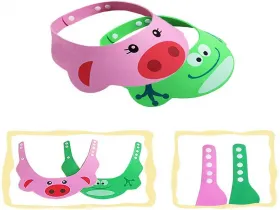
A soft bath toy and a rigid floating tray fail differently. One generic checklist cannot judge both. |
| Re-inspection terms |
Who pays for the second visit, and whether one failed SKU holds the whole container. |
In a bundle, one rejected line can delay the other. The cheapest quote is often the one that says nothing about this. |
| Report structure |
One combined report or separate sections per SKU, with photos per product. |
You need per-SKU evidence to make a claim against the supplier. A merged pass/fail verdict is not usable for that. |
Why EVA foam pairs behave differently from hard-goods pairs
If your second product is another foam item, the inspection workload looks similar on paper and still behaves differently in practice. Foam products are judged largely on surface and print quality, and those defects are not always visible at a glance under warehouse lighting.
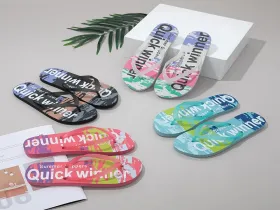
Print coverage is the usual argument. On heat-transfer printed EVA, thin ink coverage lets the foam underneath show through, and the effect depends on how many passes of white base were laid down before the colour layer. At Fulikai, heat-transfer printing is described as reaching over 95% color fidelity, with multi-pass white-base printing used to raise saturation further — see heat transfer printing on EVA foam. Whatever your own supplier does, write the acceptance rule down before the inspector arrives: which side is viewed, at what distance, under what light, and how much of the surface may show base colour before a piece is rejected. An inspector working from "print quality acceptable" will pass pieces you intended to reject.
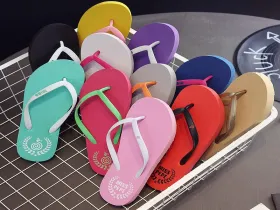
Colour consistency is the second one. EVA foam coloured during one-step foaming with masterbatch can shift between batches, and a bundle that mixes an in-stock colour with a custom match makes that shift easy to miss. Compare the approved sample against production units from more than one carton, not from a single open case.
Softness and thickness matter when the pair includes something dimensional, such as a garden kneeling pad next to a printed tile set. Foam compresses in the carton. Measure after the pieces have been out of the box long enough to recover, and state that recovery time in the inspection instruction.
Safety testing is where bundle quotes get quietly narrowed
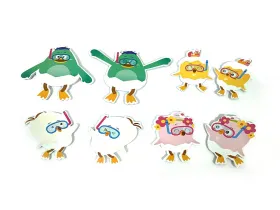
When a bundle mixes an item intended for children with an item intended for adults, the test scope must not be averaged across them. A bath toy and a pool game tray may ship on one container, but they do not carry the same obligations.
Ask each inspection firm to state, in writing, which checks are visual and which require lab work. Visual inspection can confirm dimensions, print, assembly, packaging and marking. It cannot confirm that a material meets a children's safety limit or a restricted-substance requirement — those need test reports from an accredited laboratory.
A factory running in-house testing narrows the gap between what is checked and what is claimed. Fulikai states that all products pass through 16 types of tests during production, including colour fastness, tensile strength, ink material environmental-protection testing and children-product safety testing, and that it supports 100% third-party inspection — details on EVA foam factory audits and inspections. That is a useful baseline to ask your own supplier for: which tests happen during production, whether you get the records, and which of them the third party repeats on site.
Practical rule: if a quote bundles two products but lists one safety scope, ask which product that scope was written for. Nine times out of ten it is the one with the simpler requirement.
How to keep the second visit from being paid twice
The largest hidden cost in a bundled inspection is not the fee — it is the re-inspection. Two questions settle most of it before you book:
- Is the verdict per SKU or per shipment? Insist on per-SKU. Otherwise a failed printed item can hold a clean moulded item, and the container waits.
- Who pays for the re-check, and what triggers it? Get the trigger written into your purchase terms, not just into the inspection firm's quote.
This connects directly to payment terms. Many EVA foam orders are structured as a 30% advance with the balance released after pre-shipment inspection passes. If your inspection report is merged across SKUs, "passes" becomes an argument rather than a fact. Keep the payment release tied to per-SKU results so the clean line can ship and be paid for while the other is corrected.
A supplier that inspects before you do reduces how often this comes up. Fulikai describes full manual inspection before shipment, with defective items rejected rather than reworked into the lot, and reports an average defective rejection rate above 10% on its own line — see EVA foam quality control. A rejection rate that high is not a warning sign; it is the reason fewer lots reach your inspector in a state that fails.
What to send with the inspection request
The fee comparison only holds if every firm is quoting against the same instruction. Attach these five things to each request:
- The approved sample or golden sample reference for each product, including which side carries the print.
- Carton quantities and total order quantity per SKU, so man-day assumptions are calculated rather than guessed.
- Written acceptance criteria for print coverage, colour match and dimensional tolerance.
- The sampling plan you expect, stated per SKU.
- Your re-inspection rule: who pays, and whether one failed SKU holds the others.
Send the same pack to every firm. The quotes become comparable at that point, and the differences you see are real differences in coverage rather than differences in what was assumed.
A short checklist before you sign the inspection order
- Attendance, workload and re-check shown as separate amounts.
- Man-days stated with units per man-day for each SKU.
- Sampling plan defined per product, not pooled across the bundle.
- Test scope split between visual checks and lab-dependent checks.
- Report delivered in per-SKU sections with photos per product.
- Re-inspection cost and trigger agreed in writing before the first visit.
Pairing foam products with a second line? Before you compare inspection quotes, confirm what your supplier already checks during production and which records it can hand over. Fulikai is a
Shenzhen EVA foam products manufacturer working to customer drawings and samples across toys, household items, water games and promotional goods, with factory audits from Coca-Cola, Walmart and Sedex on file and buyer-conducted audits welcomed. Send your bundle specification to
Contact Us and we will tell you which checks are already covered before a third party is booked.