A low-selling variant in a private label promotional line rarely fails because the file stops working. It fails because the artwork no longer matches the promotion, the format stopped fitting how salons hand things out, or nobody reorders it after the first batch. The decision that matters is not whether to keep the SKU but when to stop restocking it and what to put in its place. Below is a practical sequence for buyers of wholesale EVA nail files running branded salon giveaways, written from the point of view of the factory that cuts and prints them.
Start with sell-through, not with a feeling about the design
Before anything else, separate two numbers that are usually mixed together. The first is how many pieces you bought for the program. The second is how many were actually distributed by salons, at events, or through retail shelves. A giveaway that sits in a carton for three months is not slow because clients dislike it; it is slow because it never reached the point of use.
Then look at what happened after distribution. If a salon receives printed files with your logo and reorders them as a consumable, the item has moved from giveaway to supply line, and that reorder behaviour is the strongest signal you will get. If the file is handed out and never repurchased, the design may still be fine while the format is wrong — too small for the counter, too novelty for the service menu, or printed in colours that clash with the salon's own interior.
Only after those two readings should you compare variants against each other. Compare identical distribution conditions: same number of salons, same season, same accompanying product. A variant tested at a spring event and another tested at a winter holiday promotion are not comparable, and killing the second one on that basis usually removes a design that was never fairly trialled.
Five concrete triggers for phasing out a variant
1. The artwork is already obsolete. A promotional line tied to a campaign, an anniversary year, a sponsor name or a seasonal colour becomes unserviceable the moment that reference expires. Restocking an old plate then costs you the plate and the stock in one go.
2. The format does not fit how salons distribute it. A double-sided file meant for a manicure counter needs to survive being dropped in a drawer with polish bottles. If the item is repeatedly reported as lost, bent, or kept by staff rather than given to clients, the physical specification — size, thickness, board stiffness — is the problem, not the print.
3. One colourway carries the whole variant. In promotional runs, a single strong colour often outsells the rest of the set. If your slow variant exists mainly because it was printed in a weak colour, replace the colour and keep the tooling.
4. The reorder unit does not match the buyer's storage. Salon chains order by service station or by month, not by your carton size. A variant that arrives in quantities a single location cannot absorb will look like poor sell-through when it is really an ordering mismatch.
5. Compliance paperwork for the destination market is missing. Different markets require different material documentation. Rather than patching an old SKU, retire it and re-issue the same shape under a specification your factory can document for that country.
What to keep when you discontinue a design
The expensive part of a custom promotional file is not the foam. It is the cutting die, the print plate and the approved colour formula. When you retire an artwork, ask your manufacturer which of those assets can be reused on the replacement design. A shape that stores well and a die that already fits your packaging are worth carrying forward under new graphics.
At Fulikai, custom shapes are produced by stamping and laser cutting from customer drawings or samples, so changing a silhouette does not require starting over; the service team reviews submitted artwork and suggests adjustments such as linework changes before production. Plate-making takes 5–7 days, with a five-day fast turnaround option for promotional deadlines, which makes it realistic to retire one variant and introduce another inside a single campaign window. See the full custom EVA foam manufacturing page for the process.
Print quality is where replacement designs usually disappoint
Buyers who phase out a variant often replace it with a design that prints badly on foam: the base colour of the EVA shows through, pastel logos turn muddy, and the finished piece looks cheaper than the file itself. Heat-transfer printing with repeated white-base passes solves this because the colour sits on an opaque layer instead of soaking into the foam.
Fulikai's self-developed heat-transfer process is specified at over 95% colour fidelity, with multi-pass white-base printing to raise saturation — details are on the heat transfer printing on EVA foam page. When you commission a replacement design, ask for a printed sample against your actual Pantone reference before approving the plate, and keep that approved sample as the acceptance standard for every later batch.
Build the giveaway into a consumable set
A single file is easy to ignore. A small branded set used during the service itself gets handled, seen and replaced. The wholesale EVA nail products range covers shaping files, sponge buffers and polishing blocks, plus washable toe separators that can carry the same printed logo.
The EVA nail file itself is a useful base for a giveaway because it already does three jobs: one side shapes and files the nail edge, a sponge side buffs the surface and removes surface oils, and a polishing side brings a glossy finish. That gives you a reason to print instructions or a service step on the packaging instead of only a logo, which is what turns a giveaway into something kept on the counter.
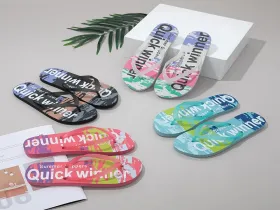
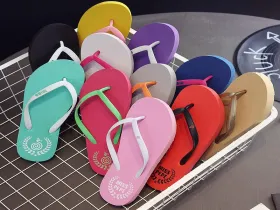
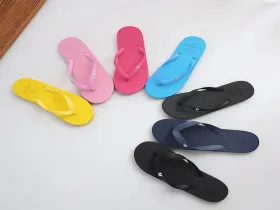
Pairing the file with bulk pedicure slippers also works well for salon programs, since slippers are consumed per client while files are kept — the two items cover both immediate use and lasting brand visibility.
How to retire a variant without stranding stock
Plan the phase-out backwards from your remaining inventory. Run down what you hold with a promotion that gives the old artwork a reason to move — an event, a gift-with-service, a staff kit — and place the replacement order in parallel rather than after the old stock is gone. With plate-making at 5–7 days and bulk orders delivered within 15 days, the overlap is easy to arrange; details are on the delivery and support page.
Two practical safeguards: split the replacement order into an initial batch and a follow-up, so you can correct colour or size after the first salons report back; and put the approved sample plus the print standard in writing on the purchase order, so a later reorder is judged against the same reference rather than against memory.
Quality checks before any promotional batch ships
Promotional items get handled roughly and are often given to children at family salon events, so documentation matters more than buyers expect. Fulikai's Shenzhen factory of over 3,000 square meters runs 16 types of tests during production — including colour fastness, tensile strength, ink environmental testing and children's product safety testing — with full manual inspection before shipment and support for third-party inspection and buyer audits. The factory holds ISO 9001:2015 certification and reports CE, EN-71, FDA, FCC, RoHS, SGS and REACH documentation; confirm the specific certificate or test report your market requires before printing a compliance claim on packaging.
Where a replacement design usually goes wrong in production
The Monster Jam custom cheering hands order is the clearest example we have of how much the process, not the product idea, decides whether a promotional line survives. A trading company brought only a concept and asked for full design and sample development; the piece needed single-colour screen printing combined with partial heat-transfer printing and double-sided work. After comparing factories nationwide for months, the client came back with roughly 25 days left to produce 80,000 pieces, because no other supplier could reproduce the approved print effect. Fulikai ran two shifts until delivery. The point for promotional buyers is narrow but important: once a print effect is approved, changing suppliers mid-program is what actually strands your stock.
A short decision checklist
- Measure distribution and reorders separately from purchase volume.
- Retire artwork that carries an expired campaign reference; keep the die and colour formula if they still work.
- Fix a weak colourway by reprinting, not by discontinuing the shape.
- Match reorder quantities to what one salon location can store.
- Approve a printed sample against your colour reference before the plate is finalised.
- Overlap old and new stock so the transition costs nothing in lost giveaways.
If you are weighing a replacement design for a salon giveaway program, send us the artwork, the destination market and your remaining stock position. We will review the print feasibility, quote the plate cost and confirm which tooling can be reused: Contact Us or send an inquiry. Shenzhen Fulikai Packaging Products Co., Ltd. has manufactured custom EVA foam products in Shenzhen for buyers in Japan, South Korea, Europe and the United States.