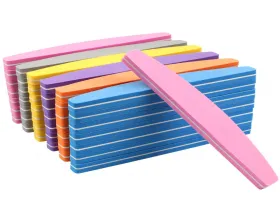
An assortment of wholesale EVA nail products rarely behaves as one SKU in the warehouse. The shaping file, the sponge buffer and the polishing block look similar on a shelf card, yet they differ in thickness, flexibility, abrasion surface and packaging. Treating them as identical is where stockouts, damaged abrasive surfaces and returns start. Below is how salon supply retailers and beauty distributors can set separate size and handling requirements for each variant of an EVA nail buffer assortment.
Why a single specification fails across the assortment
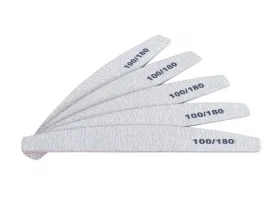
Fulikai's own product line shows the split clearly. The EVA nail file family covers three distinct working tools: a dual-sided shaping file with different grit options for filing nail edges and removing polish; a dual-sided sponge buffer used to smooth the nail surface and remove surface oils before gel application; and a dual-sided polishing buffer that pairs fine sandpaper with a soft sponge to smooth fine surface lines and finish for shine. Same material, same factory line, three very different handling profiles.
The practical consequence is that one incoming-inspection checklist applied across the whole assortment will pass items that should be rejected. A shaping file needs its abrasive edge intact and its core rigid enough not to flex while filing. A sponge buffer needs resilience and a clean, even surface, because it must stay washable and hold its shape after repeated use. A polishing block needs its fine-grit face free of embedded dust, since anything trapped in that face scratches the nail plate instead of polishing it.
Set size requirements by variant, not by category
Write the dimensional requirement per variant in the purchase order, and confirm it against an approved pre-production sample rather than a category average. Buyers usually specify length and width; the specification that actually protects retail performance is thickness and density, because those decide whether the tool feels usable in the hand.
| Variant | Size points to lock down per SKU | Why it matters at retail |
|---|
| Dual-sided shaping file | Overall length, width, core thickness, and whether the two faces carry different grits as ordered | A core that is too thin flexes during filing; a wrong grit pairing makes the SKU unusable for its stated task |
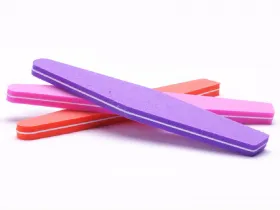
| Sponge buffer block | Block thickness, sponge resilience, and lamination bond between the sponge and the backing | A soft or delaminating block collapses in use and separates at the seam after a few cleanings |
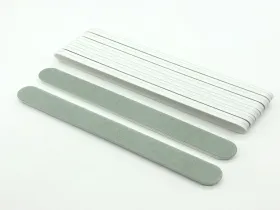
| Polishing buffer | Thickness of the fine-grit face, flatness of the working surface, edge trim on all four sides | Ragged edges catch on skin and fabric; an uneven face gives patchy shine and looks defective on display |
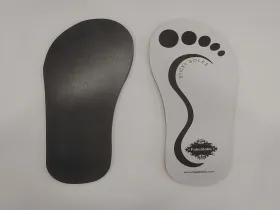
| Pedicure slippers in the same assortment | One-size last, sole thickness, depth of the diamond-cut anti-slip texture | Shallow tread on wet salon floors is a safety complaint, not a cosmetic one |
Where the supplier publishes standard dimensions that conflict with what you see in product imagery, do not restate them as fact in your own listing. Ask for a measured sample and record the measured value in your item master. Fulikai builds custom shapes and colors from customer drawings or samples using stamping and laser cutting, so when your retail program needs a specific size, that is a normal specification to state rather than a special request.
Handling requirements differ by surface type
The abrasive face is the part that fails in transit and in-store storage. Set handling rules per variant:
- Abrasive-faced items (shaping files, polishing buffers). Require individual protective packaging for the working faces, and prohibit loose bulk packing where faces rub against each other. In a DC, keep them out of direct heat, since softened EVA loses its flatness.
- Sponge-faced items (sponge buffers, toe separators). Require compression limits in cartons; permanent deformation in a sponge face cannot be recovered on the sales floor. These are washable and disinfectable on both sides, so packaging must also keep them clean before opening.
- Multi-variant assortment boxes. Specify the inner divider layout so the abrasive edges of files do not sit against sponge faces. This is a packaging instruction to give at quotation stage, not after production starts.
For mixed nail-care assortments, retailers often pair buffers with nail files and polishing blocks and consumables in one shelf unit. Keep the consumable out of the same inner carton as the abrasive tools: slipper soles carry dust that ruins a fine-grit face.
When to set separate requirements: three triggers
Set variant-level requirements rather than one category spec whenever any of these applies:
1. The assortment is sold as a kit or on a shared shelf card
If the consumer sees one offer containing three tools, every quality failure in the weakest variant becomes a complaint about the whole kit. Kit SKUs need per-variant inspection criteria and an assembly instruction that keeps surfaces separated.
2. Your channels differ in storage conditions
A beauty distributor shipping to salon wholesalers and an e-commerce seller shipping single units face different risks. Salon-channel cartons ride hot containers and sit in back rooms; single-unit parcels get dropped. Set carton crush strength, inner packaging and stacking limits per channel for each variant.
3. You are private labelling or changing artwork
Print changes the handling profile. Fulikai uses heat-transfer printing on EVA with multi-pass white-base printing for color saturation, and printed faces need to be protected from abrasion during packing. If your SKU carries a logo on the working face area, that variant needs its own packing rule.
A simple rule of thumb: if two items in the assortment need different incoming-inspection checks, they also need different size and handling requirements on the purchase order. Writing them as one line item is what makes a defective batch invisible until it reaches the salon.
How to put this into a supplier agreement
State the variant-level requirements before tooling and plate-making, because packaging layout and printing plates are set early. Fulikai's published process runs from needs consultation through proposal and quotation, design drafts and renderings, mold opening and print molding, signature confirmation, and a 30 percent deposit on contract signing, with plate-making quoted at 5 to 7 days. That window is when size and handling details should already be in writing.
For incoming quality control, ask what the factory already covers. Fulikai reports 16 types of production tests including color fastness and tensile strength, full manual inspection before shipment, support for third-party inspection, and factory audit reports from Coca-Cola, Walmart and Sedex. If you also sell bulk pedicure slippers alongside the buffers, align your inspection sampling plan across the assortment so one shipment visit covers every variant.
Frequently asked questions
Should sponge buffers and polishing blocks share one spec sheet?
No. The sponge buffer is judged on resilience and lamination, while the polishing block is judged on the flatness and cleanliness of its fine-grit face. One shared sheet lets both be inspected against criteria that fit neither.
What is the most commonly missed dimension?
Thickness and density. Retailers specify length and width, then receive a buffer that flexes in use. Confirm thickness against an approved sample and record the measured value.
Can one assortment box hold files, buffers and slippers together?
Only with a specified inner divider layout. Keep abrasive faces separated from sponge faces, and keep slipper soles away from both.
How early must handling requirements be agreed?
Before mold opening and print molding. Inner packaging layout and protective interleaf for abrasive faces are set during quotation and sample approval, not after production.
Fulikai is a Shenzhen EVA foam manufacturer working from customer drawings and samples, and welcomes inquiries from nail-product manufacturers, salon supply distributors and gift companies. Order hotline +86 13827489472, email
[email protected], or send your requirements through the
message page.