A single boat refit is a sample order. A maintenance chain buying the same self-adhesive EVA deck sheet across dozens of jobs every season is a tooling, tolerance and paperwork problem. This article walks through the deck templates, trim outlines and drawing details that change once you buy marine decking for a service network instead of one hull.
One boat, one rule; fifty boats, fifty rules
When an individual owner buys EVA boat flooring, the seller ships a roll of faux teak sheet, and the buyer cuts it to shape on the driveway with a utility knife. The fit risk sits with the installer, and there is only one installer.
A boat maintenance chain — refit workshops, marinas with service departments, mobile detailing and decking crews — carries that risk for its customers. Its technicians work on runabouts, pontoons, centre console fishing boats, sailboats and kayaks in the same week. The purchasing question stops being "is this sheet non-slip?" and becomes "can we order this sheet against a drawing, get the same cut every time, and hand it to a technician who has thirty minutes for the job?"
That is where the difference between a foam supplier and a Fulikai EVA foam manufacturer with in-house cutting becomes visible: whether your outline drawing survives the trip from your workshop to their production floor.
What is actually being specified when you order deck sheets for a chain
Fulikai's marine sheet is a closed-cell EVA foam in faux teak strip design with pre-machined groove lines, a pressure-sensitive adhesive backing and a release liner, supplied in roll form. The published colours are grey with black lines and teak brown with white lines. It is described as UV and saltwater resistant, cuttable with scissors or a utility knife, and suitable for cockpits, swim platforms, bow decks, boarding steps and curved hull surfaces; the same sheet also covers RV floors, pool edges, sauna rooms and outdoor non-slip platforms.
Those attributes are fixed by the material. What you control is everything around them:
- Sheet format versus cut parts. Rolls give technicians freedom and put fitting time on the invoice. Cut parts move that time to the factory, where one nesting layout serves many jobs.
- Outline geometry. A cockpit template traced on cardboard can be redrawn as a single vector outline the factory cuts by stamping or laser.
- Groove direction. Teak lines running fore-and-aft read correctly on a deck; rotated 90 degrees on a cut part they look wrong to the boat owner even though the grip is identical.
- Colour assignment per location. Grey with black lines for work areas, teak brown with white lines for guest-facing surfaces — decided at order, not at the job.
- Adhesive system. The stock product carries a strong pressure-sensitive backing. Chains that need repositioning time in warm weather should raise this before the first production run.
Deck templates: how to hand over a shape you want repeated
1. Trace once, digitise once, reuse forever
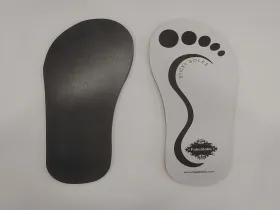
For each hull type your crews see repeatedly — the 21-foot centre console, the 24-foot pontoon swim platform, the standard bow walkway — make one master template. Cardboard or thin plastic traced in place is enough to capture the shape; what matters is that it becomes a single clean outline with dimensions before it reaches the factory. Fulikai produces shapes from customer drawings or physical samples through stamping and laser cutting, and the service team reviews submitted designs and returns improvement suggestions, including line work details, before production.
2. Split large areas into installable pieces
A single full-cockpit piece is hard to position over a curved deck and impossible to trim neatly at a rub rail. Segmented layouts — the same logic behind multi-piece traction sets on boards — let technicians seat each piece, keep seams on natural break lines, and replace one worn section instead of the whole deck. Ask for the split lines on your drawing rather than leaving them to the cutter.
3. Put groove direction on the drawing
Mark an arrow for teak-line direction and label which side is the wear face. Two identical outlines with different grain orientation produce two very different looking decks, and a chain cannot argue about aesthetics after the adhesive has been laid down.
4. Account for holes, hatches and hardware
Drain plugs, rod holders, hatch cut-outs and cleat clearances belong on the outline as dimensions from a fixed datum point. If your crews already remove hardware to fit a sheet on site, that labour is worth pricing against a pre-cut part.
Trim outlines: where chains usually lose money
Three trim decisions decide whether a decking job is profitable:
| Decision | Single-boat purchase | Chain purchase |
|---|
| Cutting method | Utility knife on site, edge quality varies by technician | Laser or die cut from your outline; identical edge every job |
| Edge treatment | Bare cut edge, sealed by the installer if at all | Specified edge detail agreed once and repeated |
| Waste | Offcuts discarded at each marina | Pieces nested together across several templates in one sheet |
| Reorder | Buy another roll when needed | Same part number, same outline file, no re-measuring |
Nesting matters more than most buyers expect. Send your full template family — cockpit, platform, bow step — in one file and ask for a nesting layout across them; the sheet you would have scrapped as offcut becomes the small parts.
The purchasing checklist that changes with a chain
- Sample plates before tooling. Fulikai's plate-making takes 5 to 7 days, and sample plates cost only a few hundred dollars. Use them to confirm colour, groove depth and how the sheet wraps your tightest curve before committing to volume.
- Part numbering on your side. Give every outline a code your crews can read at the marina — "CC21-COCKPIT-A" beats a photo of a cardboard template.
- Version control on outlines. When a hull model changes, retire the old code. Two live versions of one deck part is the most common way a chain ships the wrong sheet to a job.
- Lead time you can quote customers. Plate-making runs 5 to 7 days and bulk orders can be delivered within 15 days; urgent jobs are handled by reallocating in-house capacity. Decide whether your workshops hold stock or order against bookings.
- Inspection at the dock, not at the factory gate. Every product passes 16 types of test during production — colour fastness, tensile strength, ink environmental testing and children's-product safety testing among them — with full manual inspection before shipment, and 100% third-party inspection is supported. Chains that want their own check on arrival should write it into the order terms.
- Material paperwork per destination. Tell the factory which country the goods are going to; raw materials are then recommended against that market's standards. The Shenzhen site lists ISO 9001:2015 together with CE, EN-71, FDA, FCC, RoHS, SGS and REACH coverage — confirm the specific certificate or test report your market and product need rather than assuming one document covers every SKU.
One practical caution on adhesive. Self-adhesive marine EVA is forgiving on clean, dry, degreased deck surfaces and unforgiving on anything else. Chains that get edge lift in the field usually have a surface preparation problem, not a foam problem. Write the prep steps into your work instruction and check them the same way you check torque.
How this fits next to the rest of the traction range
Marine decking shares its material and adhesive know-how with the board pads on the same production lines. A SUP traction pad in high-density closed-cell EVA with diamond grooves and a tail kick, and the 12-piece paddle board traction pad at 77 by 25 inches total with 3 mm deep diamond grooves and marine-grade adhesive backing, are both cut-and-assembled problems of the same kind: outline, groove depth, adhesive system, colour. A chain that stocks deck sheet can add board pads — including 4-piece pet traction sets sized 53 by 32 cm for paddle boards, kayaks and pool steps — to the same purchase order and the same freight container.
A short worked example
Say a service network supports four hull types across six locations. Instead of buying rolls per location, they trace one master template per hull type, send four outlines plus two small accessory outlines in one file, request nesting across the set, fix grey-with-black-lines for cockpits and teak-brown-with-white-lines for swim platforms, and mark groove direction on every outline. Sample plates come back inside a week; the crew lead dry-fits them on the worst-curve hull before sign-off. After that, each location orders part numbers against bookings, and the workshop stops measuring.
Nothing in that sequence is exotic. It is the same order process Fulikai publishes for custom work: consultation of requirements, proposal and quotation, design drafts and renderings, mold opening and print molding, signature confirmation, then a 30% deposit on signing. The only change for a chain is that the drawing you bring is a template library instead of one shape.
Send your outlines
If you buy decking by the job rather than by the boat, start with the deck templates you already trace on cardboard and turn them into cut parts. Review the marine sheet in the sample centre, or send drawings through the custom manufacturing team for a quotation.
Order hotline +86 13827489472 · [email protected] · Shenzhen Fulikai Packaging Products Co., Ltd., 5th Floor, Building B, Yuanfen Industrial Zone, Dalang Street, Longhua District, Shenzhen, China.