A trial order of heated slippers and heated insoles is the cheapest way to learn what your market actually wants. The value only arrives if you turn what you learned into a written brief for round two. This guide walks category buyers and private-label teams through reading the results of a first sample run, rewriting the specification, and rebuilding both the range plan and the SKU list for a mixed heated slipper and insole programme.
The specifications quoted below come from the published product pages on this site. Treat them as starting points to test in your own market, not as guarantees of retail performance.
Why a trial order is worth running before you commit to a range
Heated footwear sits in an awkward place in the assortment. It sells on a claim that shoppers cannot verify in a shop or on a listing photo: how long the warmth lasts, whether the battery survives a wash cycle, whether the sole fits a range of shoe sizes. That is exactly why experienced buyers place a small first order rather than committing to a full season.
A trial order lets you test three things at once. First, whether your customers understand the temperature settings and battery capacity you have chosen. Second, which product in the group does the selling: the slipper for indoor use or the insole that moves between boots. Third, where the complaints cluster, because returns and reviews tell you more than any supplier questionnaire.
Our Non-slip & Heated Footwear category covers slippers, insoles and heated boots together, which makes it straightforward to place a first order that mixes slippers with insoles so one shipment covers both use cases.
What a mixed slipper and insole trial usually contains
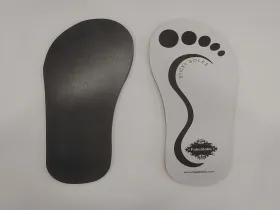
Two products behave very differently in the same parcel, so keep them separate in your tracking sheet from day one. Here is what our published pages currently specify for each.
| Element | Rechargeable heated slippers | Rechargeable heated insoles |
|---|
| Heating element | Titanium crystal nano heating wire | Metal nano-fiber heating element |
| Temperature settings | 3 levels, 45 to 65 degrees Celsius | 4 adjustable levels |
| Power | Hidden battery option plus direct power supply option | Rechargeable battery supplied in a leg pouch |
| Warmth coverage | Full-sole heating across the footbed | Element covering most of the sole area for even warmth |
| Washing | Hand wash and machine wash supported | Washable, trimmable to fit the shoe |
| Sizing | Home and office wear, anti-slip outsole for hard floors | Cut-to-size fit across a wide EU size span |
| Where it sells | Indoor relaxation, long-hour desk work, night shifts | Skiing, hiking, fishing, outdoor work, commuting |
The insole page also lists safety features that matter for air and rail travel: over-heat protection, a frost-resistant wire rated for very low temperatures, and a certified lithium-ion battery. If your customers travel to the season, put those items on the listing.
Step 1: collect evidence while the trial is still live
Most buyers start their review after the stock has sold. Start earlier, because the most useful observations happen during the season itself.
- Battery behaviour in real use. Note the runtime shoppers report against the setting they actually use, not the highest one.
- Which setting people settle on. If almost everyone stays on a low or middle level, your second round can favour longer runtime over maximum heat.
- Fit and trim questions. For insoles, record how many customers cut them and where the cut goes wrong.
- Wash outcomes. Log every complaint about a control failing after washing, with the wash method used.
- Return reasons in the customer's own words. Copy the phrasing into the brief; it becomes your listing copy and your product team's checklist.
Step 2: separate what failed from what was simply unspecified
Before you change anything, sort every observation into three columns. This is the step most buyers skip, and it is the one that saves money.
- A real product fault. A control that stops working, a sole that delaminates, a battery that will not charge. Send these back to the factory with photos and quantities.
- A specification gap. You never stated the packaging insert, the charging cable length, or which languages the control panel needed. The product is fine; the brief was thin.
- A market-fit problem. Wrong size span, wrong number of heat levels for your climate, wrong colour story for your shelf. Neither party is at fault, and the fix belongs in the range plan.
Only column one should change what you ask the factory to build. Columns two and three change what you write down.
Step 3: rewrite the brief with decisions, not wishes
A revised brief that says "improve battery life" gets you the same product with a nicer brochure. A brief that states numbers and choices gets you a different, better product. Write it as a decision sheet.
For the slipper line
- State the heat levels you want to keep and the target runtime per level, based on what trial customers actually used.
- Decide explicitly between the hidden battery option and the direct power supply option, or specify which SKU carries which. Our slipper page offers both heating options, so this is a range decision rather than a technical one.
- Confirm the sole for your floors. Anti-slip performance on tiles differs from carpet, and that single line changes complaint volume more than most cosmetic changes.
- Write the wash instruction you want printed, matching the machine-wash support the product already offers.
For the insole line
- Fix the size span you will sell. The published pages describe trimmable insoles across a broad EU range and boots in their own range, so confirm one span per SKU instead of assuming one answer fits all.
- Name the pouch or pocket the battery sits in while walking, because that is where comfort complaints usually start.
- List the certifications your market requires for a lithium battery product, and ask which certificates cover this order. Our raw material service recommends materials against the standards of your destination country once you tell us where the goods are going.
- Specify the low-temperature rating you need if you sell into outdoor or winter work use.
Bring the trial data to the consultation stage of our
custom order process. The workflow runs from needs consultation through proposal and quotation, design drafts and renderings, mold opening and print molding, signature confirmation, and a deposit on signing. Evidence in hand shortens that path considerably.
Step 4: rebuild the range plan around what sold
A first order is usually one slipper SKU and one insole SKU. A second order should be a structure, not a repeat. Think of it as three tiers.
- Core. The configuration that sold best, ordered in depth with the corrections from your brief.
- Adjacent. One step up or down: a higher heat level, a different colour, a boot rather than a slipper. Our rechargeable heated winter boots and the waterproof heated snow boots with three heat settings let you extend a winter programme without changing suppliers.
- Test. One or two small SKUs to probe next season's idea, sized so a miss costs little.
Plate-making takes 5 to 7 days, and the factory states that bulk orders can be delivered within 15 days, so an adjacent or test tier does not have to wait for a new production window if you plan it into the same order.
Step 5: turn the range plan into an SKU list you can actually manage
The SKU list is where range plans usually collapse. Keep it short and give every line the same fields.
| Field on the SKU line | Why it belongs there |
|---|
| Product type: slipper, insole, boot | Mixed programmes need one column that makes the format obvious at a glance. |
| Size span per SKU | Insoles are trimmable and boots have their own range; mixing spans causes stock you cannot sell. |
| Heat levels and target runtime | The main selling claim, so it must be identical on the pack, the listing and the product. |
| Battery option: hidden battery or direct power | Determines packaging, spares, and returns handling. |
| Wash method stated on pack | Prevents the most common avoidable complaint. |
| Certification file required for that market | Battery products need documents your customs broker will ask for. |
| Tier: core, adjacent, test | Tells you which lines to reorder and which to let finish. |
| Change requested from the trial | The single sentence that separates round two from round one. |
If a line cannot fill every field, it is not ready to order. That rule prevents the situation where three SKUs arrive with different control panels and your listing copy no longer matches the shelf.
Step 6: protect quality in the second round
A revised specification only helps if it is inspected against. Production runs through sixteen types of test, including colour fastness, tensile strength, ink material environmental testing and children's product safety testing, followed by a full manual inspection before shipment. We also support 100% third-party inspection and buyer audits. Use that in round two: write your acceptance criteria into the order so inspection checks the changes you asked for, not only the defaults.
The factory holds an ISO 9001:2015 certification and publishes audit reports from Coca-Cola, Walmart and Sedex. Details on testing and audits are on our inspection and audit page, which is worth linking in your own internal supplier file.
A worked example: from trial findings to a revised order
Consider a buyer who trialled one slipper SKU and one insole SKU. Findings: customers on the middle heat level reported satisfaction, lower levels felt unnecessary, and the highest level did not last long enough for a full working day; several returns cited an unclear control panel; some insole buyers cut them too short at the toe.
The revised brief that follows is concrete. On the slipper, keep three levels but move the top level down toward the middle of the published range so runtime lasts a full shift. Print a one-line setting guide inside the pack with icons rather than text, which also removes the language question. Move the insole to a four-level configuration for outdoor use and add a trimming template card to the packaging. Split the SKU list into a core slipper line for indoor and office use, an adjacent insole line for winter work, and one test boot SKU for the next season.
Nothing in that brief is exotic. It came entirely from notes taken during the trial, sorted into faults, gaps, and market fit.
Getting the second round quoted
Send us your trial findings, your revised SKU list, and your destination country. We will confirm which materials and certificates apply to that market, review your drawings or samples with improvement suggestions, and return a proposal and quotation against the specification you have written rather than the one you started with.